
Independent research | Ancient DNA
Identification of the Goths
Hero image: AI generated illustration of a Late Antique cemetery on the lower Danube. It is not a reconstruction of a documented site and is not a portrait of any real person.
Independent research by Ilian Yordanov. This article is published as written by its author. Independent research represents the views of its authors and does not necessarily reflect the editorial position of ExploreYourDNA.
The problem of the Goths should have been solved long ago. The sources are unanimous and absolutely categorical about who the Goths were. For the contemporaries of the Goths, they were northern Balkan people, descendants of the Getae and the Dacians. This was written by their Latin-speaking and Greek-speaking contemporaries, as well as by the Goths themselves. These facts have been well systematized with citations by Cenov, Chilingirov, and P. Georgiev. The most detailed and consistent work on the topic was done by Yulia Hadzhidimitrova.
Despite this, the question still appears mysterious both to the so-called “scholarly community” and to the general public. German-speaking peoples are convinced that the Goths were Germans, and Scandinavians also consider them their own.
This, of course, is the result of centuries of political pressure on historical scholarship. Today this tendency toward wishful “scientific” narratives is creeping even into genetics—fortunately only into the interpretation of data.
A very recent Bulgarian DNA publication appeared, titled “Ethnic Assemblages Under Gothic Material Culture in Late Antiquity”, authored by a team around Sv. Stamov and T. Chobanov.
The real news in it is the samples, which for the most part are close to present-day Balkan populations. This is important because the samples are early—before the hypothetical Proto-Bulgarians and the virtual Slavs. The news is that we have already-formed Bulgarians—many samples—who genetically look like us without needing either Asparukh or the reed-carrying Slavs.
This fact is somehow overlooked by the authors of the publication. Instead, they treat the samples as Gothic and search for a supposed “Gothic origin.”
The lack of logic and methodological rigor in their conclusions and analyses makes it difficult for a normal reader to understand whether they have actually discovered who the Goths were.
The authors themselves seem confused, because, as they say:
“What genetics showed us is something more chaotic: ethnic identities that can admit and incorporate individuals of diverse biological origins. Despite the chaos in their formation, the interesting thing is that these identities are stable and endure for centuries, even though their genetic core (in this case Scandinavian), around which they were built, fades over time.” (interview for the British edition of New Scientist)
We understand that their “Goths” are essentially a chaotic mixture of different peoples of different origins. There was apparently some “Scandinavian core” that later disappeared.
Further in the text we will examine in detail whether such a core existed, whether it dissolved, who the Goths were, and who the published samples—presented as Gothic—actually represent. For now, I will only note that the early period of the samples (from the dawn of Gothic activity) makes the claim that the Goths had already “dissolved” absurd. We will see that no such dissolution is observed even much later, when the Goths reached the western edge of Europe—provided, of course, that one follows a scientific approach and does not search for Goths where they do not exist.
In a post of mine in the group “Discussion Group for the Reconstruction of Early Balkan History”, written before these new samples appeared, I attempted—based on the then-known samples labeled as Gothic—to determine who the real Goths were.
The principle is simple.
Since the samples labeled as Gothic are quite diverse (as the authors of the cited publication themselves say—“chaotic, of different biological origin”), the only way to filter out the true Goths is to see which samples cluster close to one another. In other words, to find the primary core.
The logic is as follows: if there are Goths among the samples, they must be close to each other. The remaining samples would be scattered in different directions, without forming another cluster, because they are usually local populations or random imperial settlers.
This is exactly what happened—approximately half of the samples cluster around the Chernyakhiv Balkan-like samples. The rest are various and usually represent either local populations (in Gothic territories in Italy or Spain) or random Roman settlers. Incidentally, the same is true for the samples from the new publication—we will see this shortly.
Figure 1. Clustering of samples before the publication
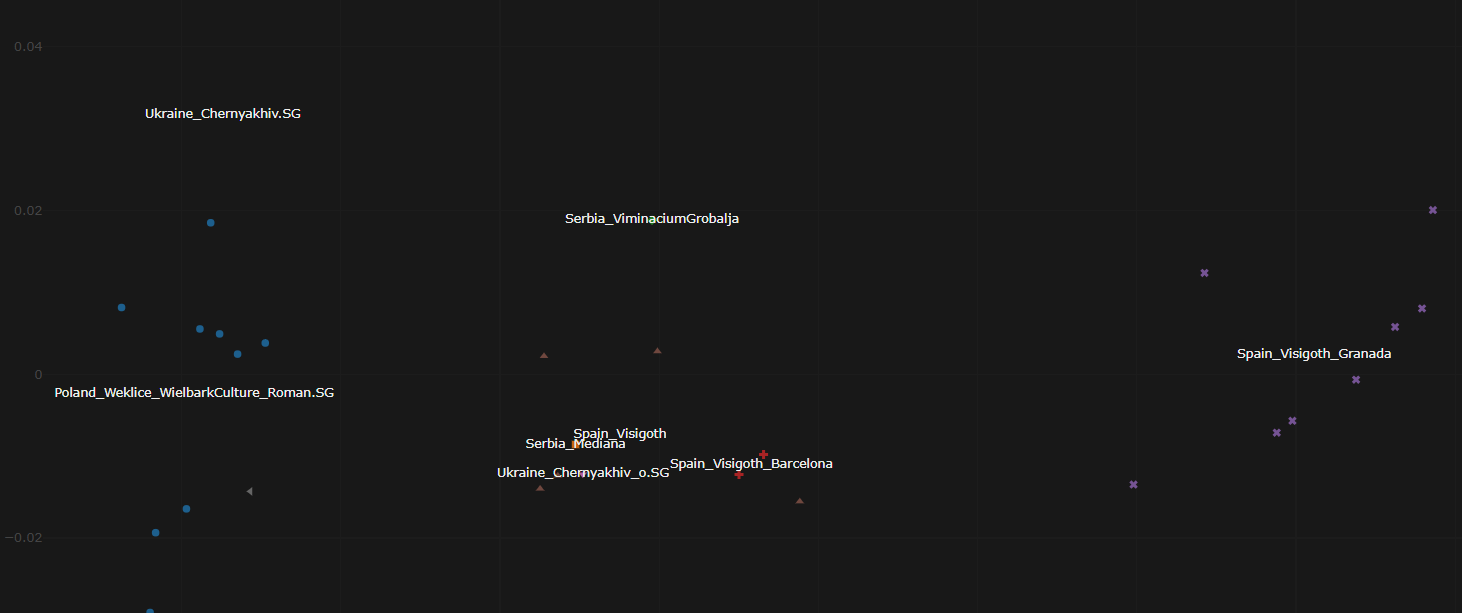
It is easy to see the clustering of Gothic samples from different periods and regions around the Chernyakhiv samples Ukraine_Chernyakhiv_o.SG:MJ-37 and MJ-36.
These samples have a strong Balkan genetic superstratum and are close to modern Balkan peoples, including Bulgarians.
Needless to say, the result—that the Goths were northern or northeastern Balkan people—would not surprise an unbiased reader of historical sources. All ancient authors who commented on the origin of the Goths described them as descendants of the Getae or the Dacians.
Their identification with northern peoples began in the Middle Ages with the rise of Swedish and German states.
Recently, more Chernyakhiv samples were published. The situation is the same—even in the description by the authors, they are mostly Central and Southern Europeans.
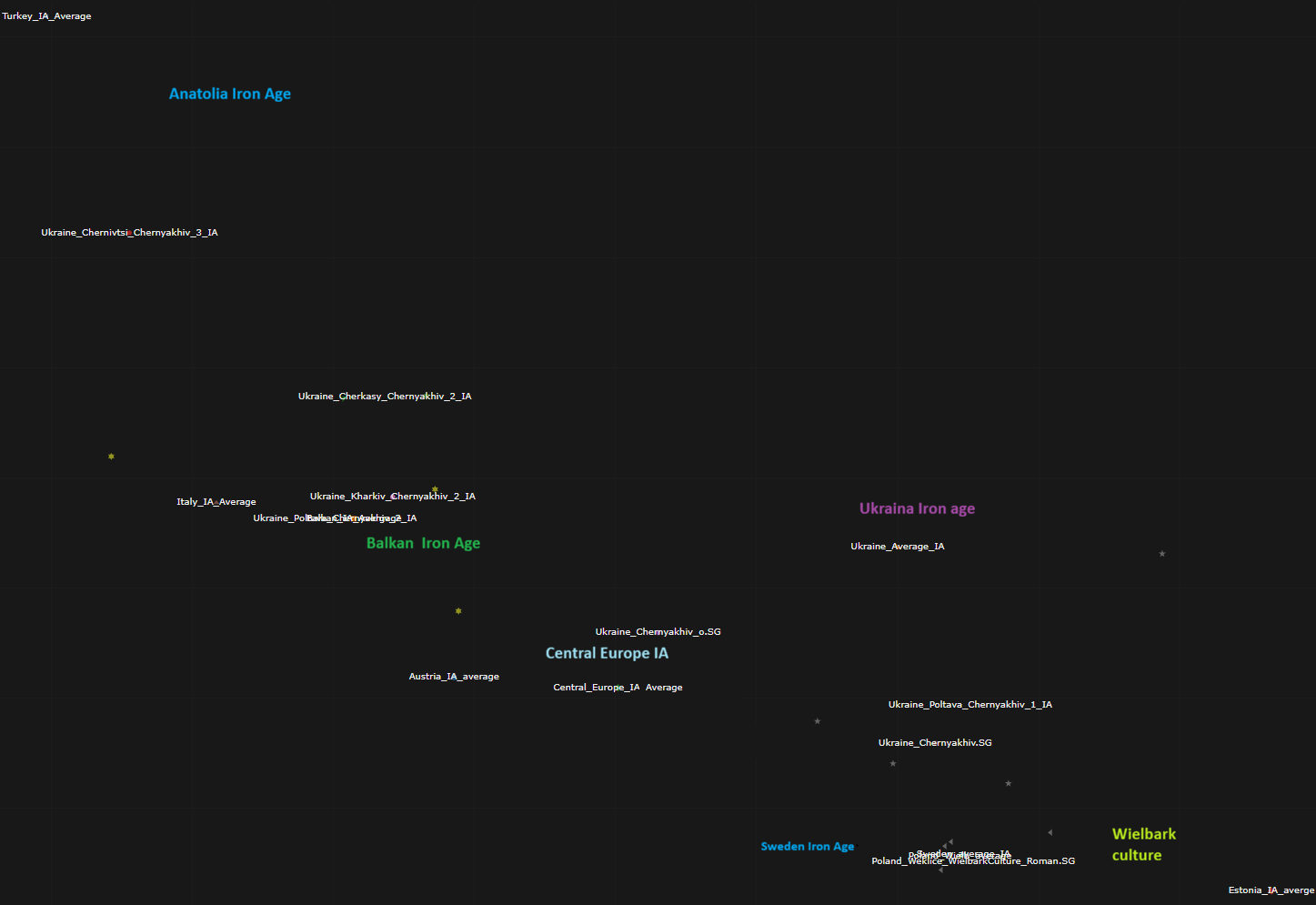
On PCA this is clearly visible. Two more northern samples appear, seemingly mixed between Ukrainian Iron Age and Polish Wielbark. Mixed samples between neighbors should not surprise us. However, they drift away from the rest of the “Goths” in Europe and do not cluster with others.
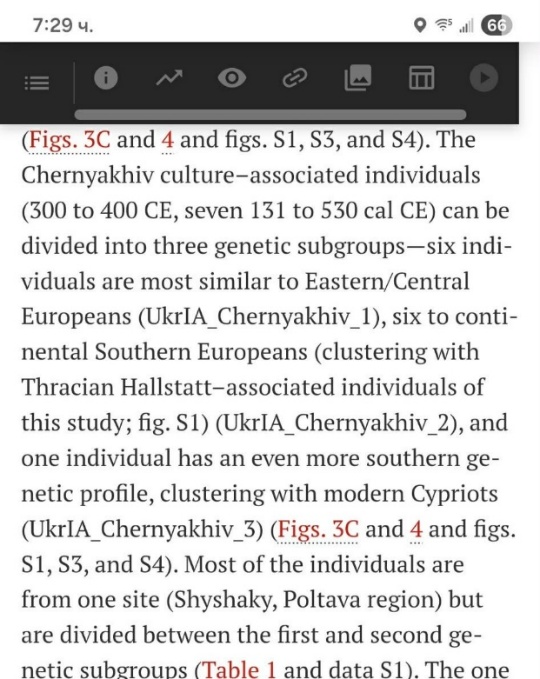
Figure 2. Distribution of all Chernyakhiv samples
If we now return to the latest publication with Gothic samples from Bulgaria, we see a similar situation—many samples clustered around the Balkans, and chaotic, diverse samples from other parts of the Empire.
Figure 3. Clustering of “Gothic” samples with added new samples from Shumen and Burgas (3rd–5th c. AD)
The new samples (starting with I4xxx) are diverse, but many cluster around the previous group.
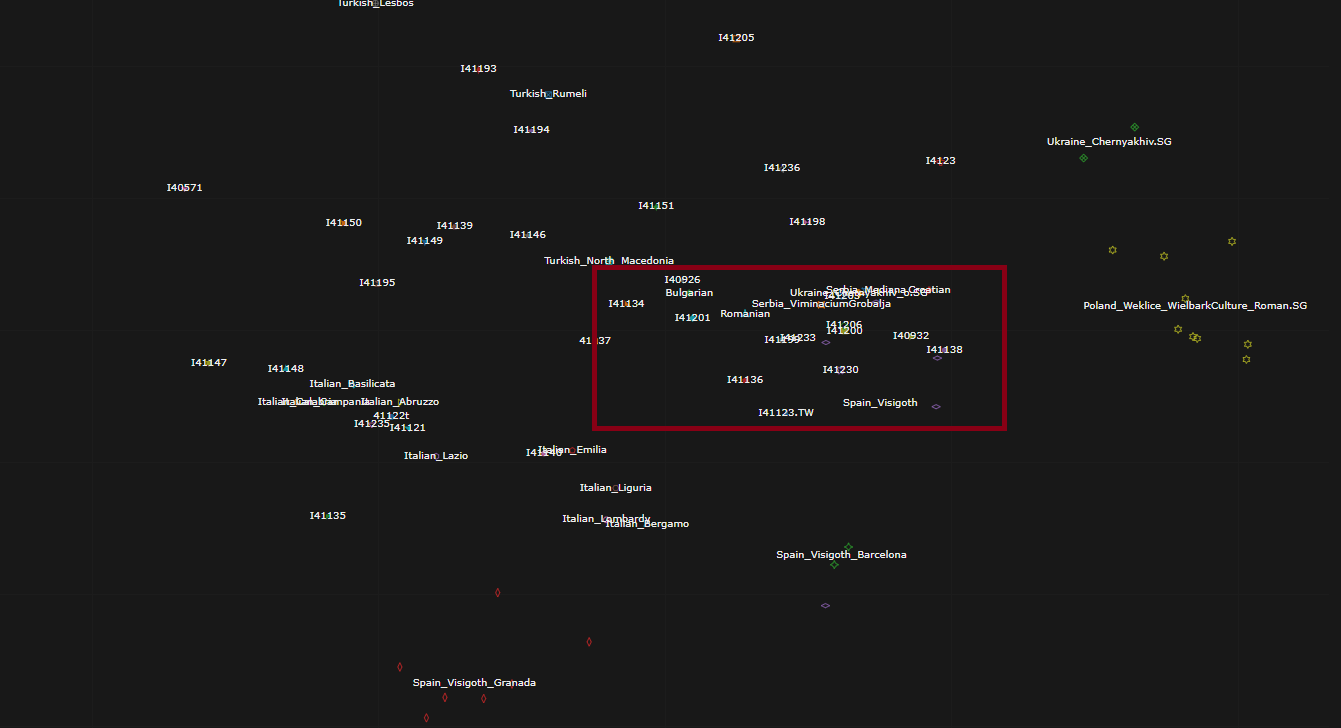
Some of the others are close to modern Italians. Many are Asia Minor–like—mixed Balkan and Anatolian, or very southern Balkan.
Not a single sample “lands” among the exotic Polish “Goths,” proclaimed as Bronze Age ancestors of the Goths in Poland. Northern samples simply DO NOT EXIST.
Let us now examine the supposed “northern core,” which allegedly dissolved by the 3rd–4th century.
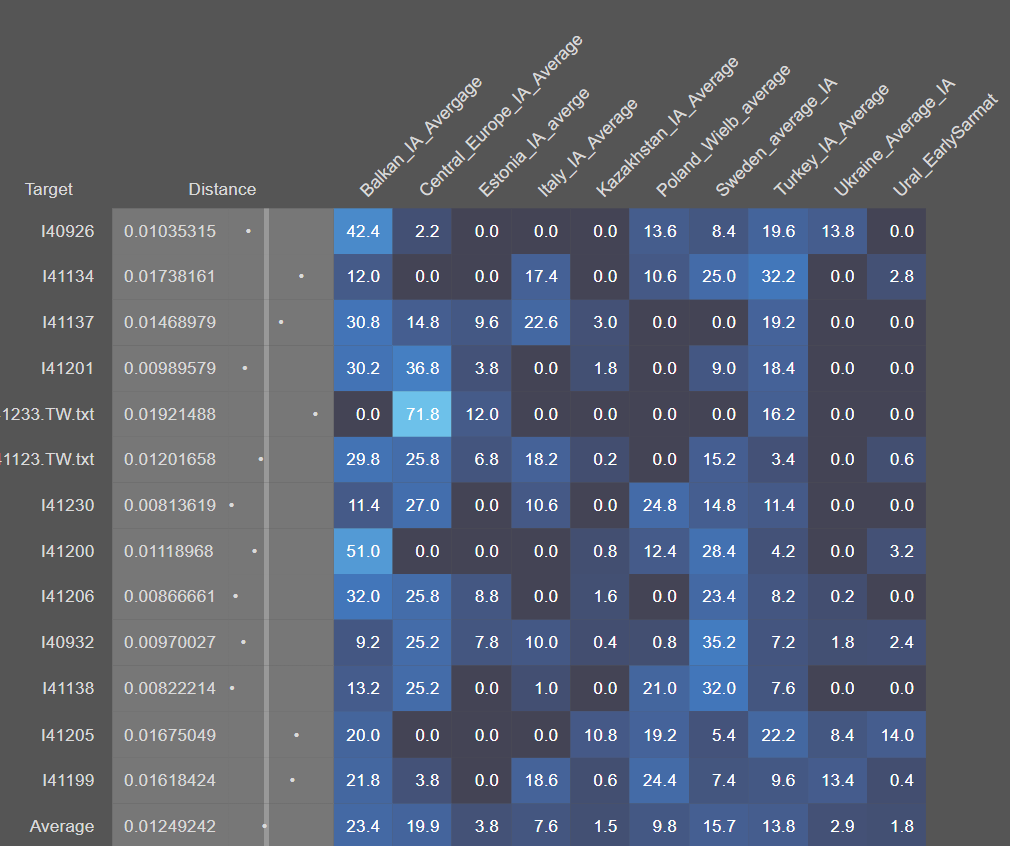
Below are the admixture models of the “Gothic” samples from the publication that cluster around the other Gothic samples and the Chernyakhiv ones. They are modeled with Iron Age samples.
We see that southern components dominate with 57%—Balkans, Central Europe, and Anatolia.
The northern component (expected and inevitable) is around 28% total (Poland, Sweden, Estonia). It is significant in a few samples, reaching 50% only in one sample—I41138.
Figure 4. Admixture models of Gothic-cluster samples (Iron Age sources)
First, the sample is 50/50—its other components are Central Europe, Balkans, and Anatolia.
Let us check its distances to Iron Age Europeans.
Figure 5. Distances to Iron Age Europeans (sample I41138)
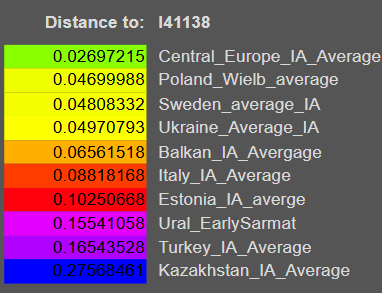
Although more northern, the sample is still closer to Iron Age Balkan populations.
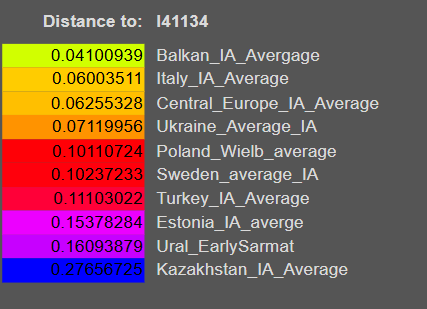
The statistics for the closest Iron Age populations for all samples:
8 Central Europe 4 Balkans 1 Ukraine 0 Sweden, 0 Poland
Whenever the closest is Central Europe, the second closest is the Balkans.
Thus, the supposed Goths from Bulgarian lands are closest to Iron Age Central Europeans and Iron Age Balkan peoples.
There is more. The Central Europeans of the Iron Age differ from their Bronze Age predecessors. Here is how they are modeled:
Figure 6. Distances to Iron Age Europeans (sample I41134)
Reflecting a known migration from the Western Balkans, the Iron Age Central European samples have a strong Balkan component, with local ancestry represented weakly.
Let us see how the most northern of them is modeled with Bronze Age Balkan samples:
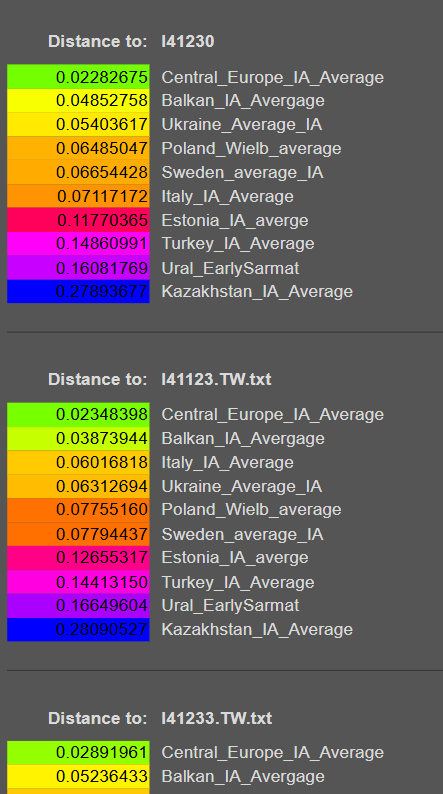
Figure 7. Iron Age Central Europeans modeled with Bronze Age sources
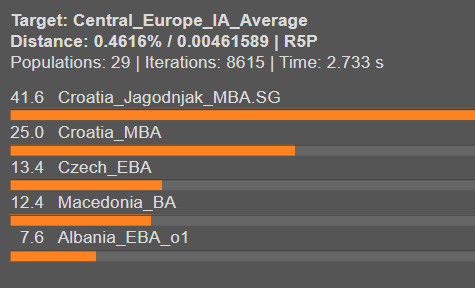
The sample is modeled with more Central European Bronze Age ancestry and no Bronze Age Swedish component.
Thus, looking at the Bronze Age core of these Bulgarian Goths, it is Balkan.
Figure 8. Bronze Age modeling of the northernmost Central European sample
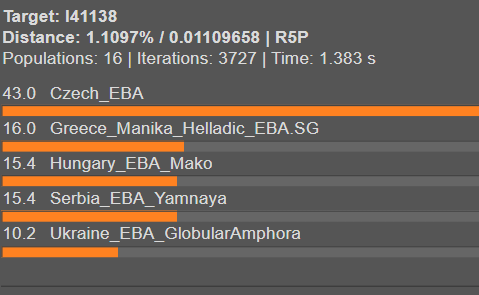
Looking at their Iron Age ancestors, they are mainly Central European and Balkan.
The northern element in them was carried by the Central Europeans.
Therefore, the “northern core” mentioned in the interview is not visible. It is not visible because it never existed. Instead, there is a clearly visible core of Balkan and Central European ancestry.
Among the samples close to one another, it is difficult to determine who was local and who was Gothic. Whatever their self-identifications may have been, these people were first and foremost our close genetic ancestors.
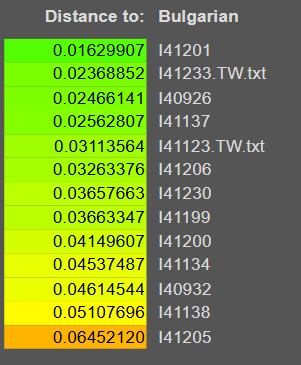
It must be emphasized that one of these Gothic samples, by all indicators, looks like a fully formed modern Bulgarian who lived nearly 2,000 years ago.
Sample I41201 is at a remarkably small distance from an averaged modern Bulgarian sample.
The same is true, to a large extent, for the first dozen samples in the table above.
Figure 9. Distances of the first ten Gothic-cluster samples to modern Bulgarians
The Goths from Bulgarian lands are typical for the period—northeastern Balkan people and such mixed with Central Europeans. If they migrated, their migrations were local, just as Jordanes describes them.