
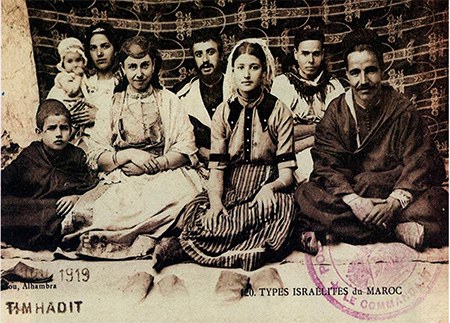
Sepharad is the Hebrew name for Iberia, and the Sephardim are the Jews who made Spain and Portugal their home for the better part of a thousand years before the expulsions of 1492 and 1497 scattered them across the Mediterranean. They carried the name of Spain with them into exile, along with a Spanish dialect, Ladino, that some still speak five centuries later. It is tempting to read all that as ancestry: the Jews of Spain, a Spanish people. The genome tells a more surprising story. A Sephardi from Istanbul or Sofia is genetically about ten times closer to an Italian Jew than to an actual Spaniard. Their deepest root is the Levant, their largest European layer is broadly Italian, and the specifically Iberian trace seven centuries in Spain left behind is real but modest. The one community that did become genetically Spanish is the one that never left: the crypto-Jews who stayed behind in secret.
Key points
- The Sephardim descend from the Jews of medieval Iberia, expelled from Spain in 1492 and Portugal in 1497, and scattered to the Ottoman Empire, North Africa, Italy and the Netherlands. The name means "Spain"; the genome is mostly something else.
- An Ottoman (Turkish) Sephardi sits about 10 Global25 units from an Italian Jew and a Romaniote Greek Jew, but about 97 units from a Spaniard. They are roughly ten times closer to a fellow Mediterranean Jew than to the Spanish population whose name they carry.
- The genome is about half a shared Levantine core and half Southern European, with the European side broadly Italian rather than Iberian. This is the same architecture found across the Jewish diaspora (Behar et al. 2010; Atzmon et al. 2010).
- The specifically Iberian component is real but modest, on the order of 15 percent in Ottoman Sephardim, against a baseline of about 8 to 9 percent in Jewish groups that never lived in Spain. It is the genetic echo of Sepharad, not its dominant note. The exact figure is proxy-sensitive and should be read as a direction.
- The mirror image is Belmonte, the crypto-Jews of Portugal who survived in secret and never emigrated. They are the most Iberian-shifted Jewish community of all, modelling at roughly two thirds Iberian. The geography of exile, who left and who stayed, shaped the genome.
- North African Jews (Moroccan, Algerian, Tunisian, Libyan) carry the same Levantine core plus a genuine Maghrebi component, a few percent of deep North African ancestry on top of the Mediterranean Jewish base.
- The thread that binds the whole diaspora is the Levantine core: about half in Sephardi, Italian and Romaniote Jews, around a third in Ashkenazim, and the overwhelming majority in Mizrahi groups such as Iraqi Jews. Sephardim and Ashkenazim are sister diasporas, not different peoples.
1. Who are the Sephardim
For roughly seven centuries, from the Muslim conquest of 711 to the close of the fifteenth century, the Iberian Peninsula held the most populous and culturally brilliant Jewish community in the medieval world. Jews called the land Sepharad, and under both Muslim and Christian rule they produced philosophers, poets, physicians and statesmen. That world ended abruptly. The Alhambra Decree of 1492 expelled the Jews of Castile and Aragon, and Portugal followed with a forced conversion and expulsion in 1497. Those who refused to convert left, and the largest streams flowed east, into the welcoming Ottoman Empire, where Salonica, Istanbul and Izmir became great Sephardi centres, and into North Africa, Italy and, later, Amsterdam.
In exile they kept Sepharad alive as identity. They spoke Ladino, a Castilian dialect written in Hebrew letters, kept Spanish surnames and liturgical customs, and married within the community for centuries. The cultural continuity is unmistakable. The question this article asks is genetic: after seven centuries in Iberia and five more in the diaspora, how Spanish are the Jews of Spain? And what binds them to the other branches of the Jewish people?
2. The Jewish cluster: neighbours first
The cleanest way to place a population is to ask what it is nearest to. The chart below gives scaled Global25 Euclidean distances (multiplied by 1000) from the Ottoman (Turkish) Sephardi average to other Jewish communities, to Southern European and Levantine populations, and to the Spaniards whose name the Sephardim carry.
The picture is the opposite of what the name suggests. The Ottoman Sephardi sits practically on top of the other Mediterranean Jewish communities, an Italian Jew at 10 units, a Romaniote Greek Jew at 11, the Bulgarian Sephardim at 18, the North African Jews in the low twenties, even the distant Ashkenazim at 29. Only then come the non-Jewish Southern Europeans, the South Italians and Sicilians in the thirties, and the Levantines, a Lebanese Christian at 49 and the ancient Levant beyond. The Spaniards, whose name the Sephardim have carried for five hundred years, are the farthest entries on the whole chart, at 97 and 101. A Sephardi is nearly ten times closer to an Italian Jew than to a Spaniard. This is the tight Jewish subcluster that the genome-wide studies described: the diaspora communities resemble one another, and the Levant, far more than they resemble the peoples among whom they lived.
3. Half Levant, half Mediterranean Europe
Model the Sephardi genome as a mixture of a Levantine source (here the Bronze Age Canaanites of Sidon, a clean deep proxy for Levantine ancestry) and a Southern European source, and it splits almost evenly. That half-and-half balance, a Levantine core under a Mediterranean European layer, is the signature of the whole Jewish diaspora, varying only in the proportions.
The Levantine core across the Jewish diaspora
Every community carries a Levantine core, which is exactly what ties them together as one people. The Mizrahi Iraqi Jews, who never left the Near East, are almost entirely Levantine. The Mediterranean diaspora, Sephardi, Italian and Romaniote, sits near half and half. The Ashkenazim carry a larger European layer, and the Iberian-resident crypto-Jews of Belmonte the largest of all. Figures are proxy-dependent; read them as directions.
4. So how Spanish are they?
Now we can ask the title question directly. If we keep the Levantine core but allow the European side to vary between an Italian and an Iberian source, how much Iberian does an Ottoman Sephardi actually need?
Levantine core, Italian layer, and the Iberian trace
The Ottoman Sephardim take about 15 percent Iberian, against a baseline near 8 percent in the Romaniote and Ashkenazi communities that never lived in Spain. The excess is the genetic memory of Sepharad: real, detectable, but a minority note over a Levantine core and a larger Italian layer. The Italian Jews show a similar elevation, consistent with the many Sephardi exiles absorbed into Italian Jewry after 1492.
5. Belmonte: the Jews who stayed
The most telling case is the exception. In the mountains of northern Portugal, the town of Belmonte hid a community of crypto-Jews, New Christians who outwardly converted but secretly kept Jewish practice for some five centuries, rediscovered by the outside world only in the twentieth century. Unlike the exiles, they never left Iberia, and over five hundred years of secret survival they inevitably absorbed local ancestry and drifted. The result is the mirror image of the Ottoman Sephardim: the Belmonte crypto-Jews are the most Iberian-shifted Jewish community in the entire panel, modelling at roughly two thirds Iberian and carrying the thinnest Levantine core of any group here.
The contrast is the whole lesson of Sephardi genetics in one pair. Two communities, both descended from the Jews of Sepharad, both proudly Sephardi in identity. The ones who obeyed the expulsion and carried the name of Spain into the Ottoman world kept the Levantine Jewish genome largely intact, with only a modest Iberian trace. The ones who stayed in Iberia in secret became, genetically, the most Spanish Jews of all. Where the body ended up, not what the community called itself, decided the genome.
6. The North African branch
A large part of the post-1492 diaspora went south, into the Maghreb, where exiles known as Megorashim settled among long-resident Jewish communities, the Toshavim, some of whose roots in North Africa long predate the Iberian expulsion. The genetics reflect that double origin. The North African Jewish communities carry the same Levantine core and Mediterranean European layer as their Ottoman cousins, plus a genuine Maghrebi component that the eastern Sephardim lack.
A real North African layer in the Maghrebi communities
The deep Maghrebi share is near nil in the Ottoman Sephardim but a real few percent in the North African communities, rising toward the south and west. Read through a modern Maghrebi proxy rather than the deep Taforalt pole, the same component comes out considerably larger. It is the local signature of centuries in the Maghreb, layered on the shared Jewish base.
7. Sephardim and Ashkenazim: sister diasporas
It is sometimes imagined that the great Jewish diasporas are essentially different peoples who happen to share a religion. The genome says otherwise. Sephardim and Ashkenazim share the same Levantine core and an unusually high level of identity-by-descent, the long shared DNA segments that signal a common, relatively recent ancestral pool. The genome-wide studies that mapped the Jewish people found the Ashkenazi population closest of all to the Sephardim, and traced both, with the rest of the diaspora, back to the Levant.
What differs between the branches is not the core but the European layer each one absorbed, and the drift each underwent afterward. Both Sephardim and Ashkenazim picked up a substantial Southern European, largely Italian-like, ancestry in antiquity and the early medieval period, before the communities moved north and east. The Sephardim then added their modest Iberian trace; the Ashkenazim carried a larger European fraction and drifted hard inside a small founding population in the Rhineland and Eastern Europe. The result is two distinct clusters with one origin, more like estranged cousins than strangers. The same studies, incidentally, found no support for the old idea that Ashkenazim descend mainly from Khazar or Slavic converts: the European ancestry is Southern European and shared with the other Jewish diasporas, not Central or Eastern European.
8. So, how Spanish are the Jews of Spain?
Only lightly. The Sephardim are a Levantine-rooted people who spent seven centuries in Iberia and five more carrying its name across the Mediterranean, and the genome records that history with surprising restraint: about half a shared Jewish Levantine core, a larger Italian-like European layer that they hold in common with every other Mediterranean Jewish community, and an Iberian trace of perhaps 15 percent that marks Sepharad without defining it. They are far closer to an Italian or a Romaniote Jew than to a Spaniard, and what they share most deeply is not Spain but the Levant and one another. The exception proves the rule: the crypto-Jews who never left Iberia did become genetically Spanish, while those who obeyed the expulsion kept the older Jewish genome. Sepharad, in the end, lives in language, liturgy and memory far more than in DNA. The Jews of Spain were never very Spanish in their blood; they were, and remain, a branch of an old Levantine people who once called Spain home.
The story in six steps
Claim and reality
The Sephardim are a genetically Spanish people, the Jewish branch of Iberia.
Ottoman Sephardim sit about 97 units from a Spaniard but only 10 from an Italian Jew. The Iberian component is a modest 15 percent over a Levantine core. The name overstates the genome.
Sephardim and Ashkenazim are essentially different peoples who share a religion.
They share a Levantine core and high identity-by-descent, and the Ashkenazim are closest of all to the Sephardim. They are sister diasporas with one Near Eastern origin (Behar et al. 2010; Atzmon et al. 2010).
All North African Jews are simply Iberian exiles, pure Sephardim.
They carry the Jewish core plus a real Maghrebi component absent in the eastern Sephardim, reflecting both the 1492 exiles and the older resident Jewish communities of North Africa.
The Belmonte crypto-Jews, who kept the faith in secret, are the purest surviving Sephardim.
Genetically they are the most Iberian-admixed Jewish community of all, about two thirds Iberian, precisely because they stayed in Portugal and married locally for five centuries.
Reproduce it yourself
Paste the coordinates below into Vahaduo (the Global25 tool) to rebuild the comparisons in this article: the Ottoman and Bulgarian Sephardim, the Belmonte crypto-Jews, the Italian, Romaniote, North African, Ashkenazi and Mizrahi Iraqi Jewish communities, the Southern European and Spanish comparison populations, the Levantine references (modern Lebanese, Bronze Age Sidon Canaanite and Iron Age Phoenician Akhziv) and the deep North African pole (Taforalt). Modern averages are scaled Global25 from Davidski; the ancient averages were computed here from the individual coordinates.
Sephardic_Jew_Turkey_(n=20),0.092538,0.145830,-0.021119,-0.059868,0.006986,-0.021363,-0.004019,-0.003657,0.010001,0.019025,0.004246,0.000682,0.001286,-0.000785,-0.004492,-0.003043,-0.001284,-0.001362,-0.003438,-0.003539,-0.002920,-0.003907,0.004258,0.000735,0.001694
Sephardic_Jew_Bulgaria_(n=2),0.088212,0.143190,-0.025079,-0.058301,0.003693,-0.023148,-0.004230,-0.004038,0.013499,0.023326,0.004872,0.002024,0.000074,0.001582,-0.004614,-0.009149,-0.009062,-0.000253,-0.004713,-0.010193,-0.005053,-0.001855,-0.002280,-0.004157,0.002514
Sephardic_Belmonte_CryptoJew_Portugal_(n=1),0.089920,0.152329,0.007920,-0.038437,0.029544,-0.015339,0.001175,0.003923,0.020861,0.029522,-0.000487,0.000599,0.002081,-0.014313,0.000814,0.009149,0.001825,-0.002787,-0.002137,0.001751,-0.006239,-0.004822,0.002342,-0.004820,0.000359
Italian_Jew_Italki_(n=9),0.093841,0.146349,-0.019820,-0.058248,0.011386,-0.024914,-0.004387,-0.003102,0.013067,0.019742,0.004872,0.000583,0.001404,-0.003440,-0.006952,-0.001974,-0.002072,-0.001070,-0.001075,-0.003835,-0.003744,-0.001333,0.000000,0.002356,0.002967
Romaniote_Greek_Jew_(n=7),0.092034,0.144060,-0.025806,-0.064554,0.005012,-0.023068,-0.005841,-0.004318,0.009145,0.018536,0.005614,0.001113,0.001996,-0.000196,-0.006825,-0.001572,0.000726,-0.002498,-0.000736,-0.000500,-0.000873,0.000389,0.000370,0.001084,0.001334
Moroccan_Jew_(n=22),0.076727,0.145728,-0.020416,-0.061576,0.011093,-0.023579,-0.008247,-0.003241,0.018584,0.022374,0.005617,-0.001519,0.005595,-0.004341,0.002480,-0.003502,-0.003260,-0.004388,-0.011164,-0.002888,-0.003443,-0.007577,0.007171,-0.002109,0.002226
Algerian_Jew_(n=8),0.074696,0.145728,-0.021213,-0.061007,0.011117,-0.026216,-0.005728,-0.002884,0.015927,0.020821,0.004993,-0.001649,0.007247,-0.004456,-0.005361,-0.000845,-0.002086,-0.001536,-0.005782,-0.002720,-0.003572,-0.001576,0.001048,0.000437,-0.001197
Tunisian_Jew_(n=10),0.071822,0.145525,-0.028737,-0.071480,0.004339,-0.025630,-0.007144,-0.000808,0.021148,0.020702,0.006106,-0.002398,0.007954,-0.000826,-0.001466,-0.000172,-0.000795,-0.001584,-0.006536,-0.001388,-0.003244,-0.008124,0.003390,0.000060,0.002167
Libyan_Jew_(n=11),0.065707,0.144482,-0.029861,-0.069533,0.004476,-0.026748,-0.007862,-0.004384,0.021159,0.020046,0.005329,-0.001948,0.007690,-0.003691,-0.001456,0.004858,0.002963,-0.002131,-0.005256,0.000466,-0.002393,-0.006756,0.004975,-0.000526,0.001742
Ashkenazi_Jew_(n=1203),0.099570,0.136317,-0.006914,-0.041091,0.010613,-0.014881,-0.001256,-0.000497,0.007188,0.013703,0.001245,-0.001000,0.001906,0.001093,-0.004849,-0.001633,-0.002459,-0.000924,-0.000126,-0.003589,-0.003472,-0.002985,0.001473,0.002556,0.000053
Iraqi_Jew_Mizrahi_(n=10),0.090489,0.138823,-0.066713,-0.074968,-0.024989,-0.022060,-0.001339,-0.008792,-0.011167,-0.001476,0.004206,-0.005890,0.011298,0.005065,-0.008537,0.009069,-0.004968,0.000152,0.001785,-0.009955,0.001522,-0.002386,-0.002785,-0.001819,0.001689
Spanish_Andalusia_(n=31),0.108462,0.145286,0.036228,-0.004209,0.044226,-0.005920,-0.002312,0.002680,0.024160,0.031815,-0.002017,0.006439,-0.012665,-0.011769,0.009610,-0.001189,-0.005485,-0.001108,-0.004144,-0.001811,0.002488,-0.000642,-0.002063,-0.003918,0.001070
Spanish_Castile_(n=7),0.108620,0.144786,0.040352,-0.002353,0.042645,0.000399,-0.002686,0.002637,0.025215,0.028507,-0.004176,0.006316,-0.013337,-0.010125,0.010955,-0.004054,-0.003949,-0.002679,-0.002765,-0.002912,-0.000036,-0.001484,-0.000986,-0.002152,0.001882
Italian_Tuscany_(n=23),0.118821,0.147693,0.014281,-0.020995,0.025931,-0.008755,-0.000848,-0.001395,0.005922,0.023271,-0.000614,0.005917,-0.011512,-0.003674,-0.002166,-0.001292,0.001967,0.000413,0.003066,-0.003746,-0.002035,0.001355,-0.000402,0.003285,-0.001421
Greek_Peloponnese_(n=25),0.117648,0.144733,0.008915,-0.025452,0.018662,-0.008556,0.002970,-0.000074,0.002863,0.015351,0.001020,0.001475,-0.001831,0.006727,-0.014935,-0.000896,0.007427,-0.000122,0.004968,-0.004047,-0.006469,0.001395,0.003525,0.001962,-0.002587
South_Italian_Calabria_(n=8),0.103437,0.148140,-0.010324,-0.046996,0.012618,-0.015025,-0.002438,-0.001587,0.004448,0.021230,0.002213,0.002997,-0.004887,-0.001737,-0.006548,-0.002784,0.005802,0.000728,0.002938,-0.005362,-0.002605,-0.000325,0.000339,0.000015,-0.002425
Lebanese_Christian_(n=25),0.090284,0.144896,-0.051862,-0.080117,-0.014279,-0.027766,-0.000865,-0.004735,0.003600,0.009221,0.005268,-0.004748,0.010608,0.001063,-0.008675,0.006794,-0.001914,0.001464,0.003057,-0.000400,-0.000499,0.001103,-0.001839,0.002612,0.000263
Levant_MBA_Sidon_Canaanite_avg_(n=5),0.081270,0.146845,-0.061320,-0.097934,-0.010525,-0.038933,-0.004794,-0.006600,0.011453,0.010169,0.010490,-0.009771,0.021585,0.005505,-0.007573,0.006523,-0.000156,-0.001191,0.001509,0.004252,0.004267,0.007543,-0.001257,0.001591,-0.000503
Levant_IA_Phoenician_Akhziv_avg_(n=11),0.081746,0.150391,-0.052625,-0.097282,-0.009261,-0.036636,-0.002350,-0.009293,0.013778,0.012939,0.010201,-0.010981,0.018812,0.001964,-0.004725,0.002700,0.001529,0.002557,0.003348,0.004377,0.002019,0.002518,-0.001120,-0.000548,-0.001796
Taforalt_Maghreb_UP_avg_(n=6),-0.190085,0.082258,-0.024261,-0.084626,0.026620,-0.056057,-0.070464,0.020038,0.156324,0.003493,0.019866,-0.032521,0.075470,-0.051494,0.072248,-0.038849,0.003716,-0.065435,-0.144134,0.037852,-0.038474,-0.124951,0.071894,-0.013817,0.016186
References and sources
- 1 Behar, D. M., Yunusbayev, B., Metspalu, M., et al. (2010). The genome-wide structure of the Jewish people. Nature 466, 238 to 242. The study that maps the Jewish diaspora and traces most communities, including the Sephardim, to a shared Levantine origin. link
- 2 Atzmon, G., Hao, L., Pe'er, I., et al. (2010). Abraham's children in the genome era: major Jewish diaspora populations comprise distinct genetic clusters with shared Middle Eastern ancestry. American Journal of Human Genetics 86, 850 to 859. link
- 3 Campbell, C. L., Palamara, P. F., Dubrovsky, M., et al. (2012). North African Jewish and non-Jewish populations form distinctive, orthogonal clusters. Proceedings of the National Academy of Sciences 109, 13865 to 13870. link
- 4 Kopelman, N. M., Stone, L., Wang, C., et al. (2009). Genomic microsatellites identify shared Jewish ancestry intermediate between Middle Eastern and European populations. BMC Genetics 10, 80. link
- 5 Global25 coordinates: Davidski (Eurogenes), with modern and ancient averages drawn from the Moriopoulos 2025 collection. Global25 spreadsheet tooling: Vahaduo. G25
Modern and ancient Global25 coordinates: Davidski (Global25) and the Moriopoulos 2025 collection. Jewish community and comparison averages are scaled Global25; the South Italian average and the Iron Age Phoenician (Akhziv) average were computed here from the individual coordinates. Global25 spreadsheet tooling: Vahaduo. Analysis: scaled Global25 Euclidean distances and non-negative least squares modelling in Python. Ancestry fractions are proxy-dependent and best read as directions rather than exact percentages; the Bulgarian Sephardi and Belmonte samples are very small and are used as indicative points only.