
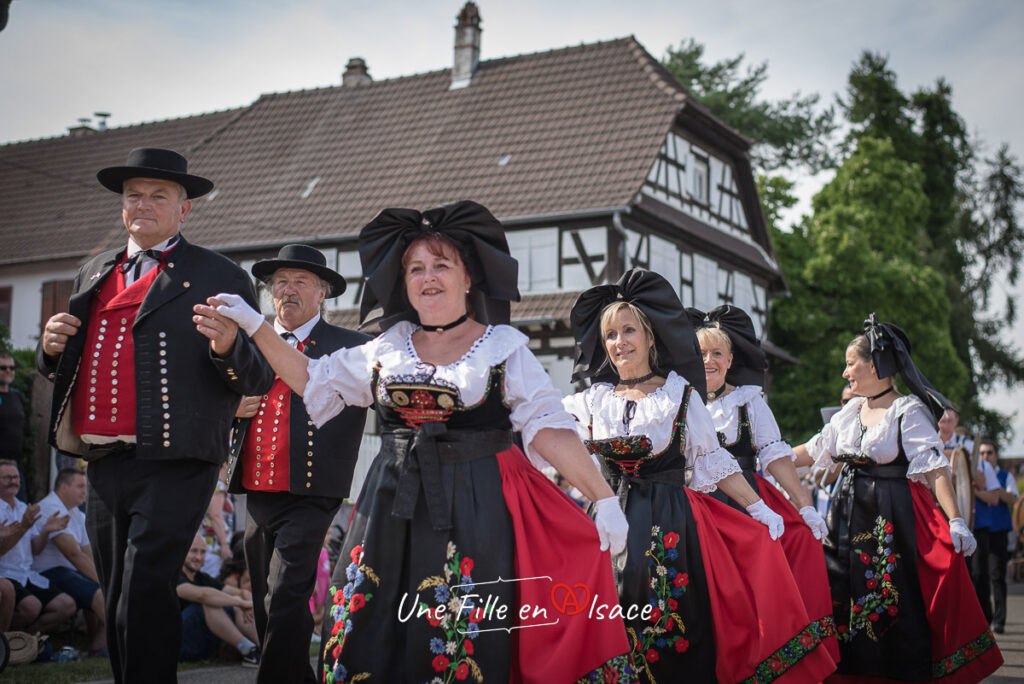
Most of France is, genetically, a quiet place: a slow cline of Iron Age Celts gently leavened, here and there, by what came after. Alsace and Lorraine sit on the one internal seam where that quiet breaks. They straddle the Rhine and the Moselle, the frontier across which the Celtic and the Germanic worlds have faced each other for two and a half thousand years, and the genome remembers it. Their deep substrate is not exotic at all: it is the Celtic Iron Age, and specifically the Hallstatt culture whose very heartland sat on the upper Rhine and the Danube, in and around these lands. On Global25 an Alsatian or a Lorrain lands closer to a Hallstatt or a La Tene Celt than to anything Germanic. But offer the algorithm a Germanic Iron Age source and it takes a real, measurable bite, a bite that grows as you walk northeast toward the Rhine: near zero in central France, about a fifth in the Vosges, a quarter to a third along the Rhine and the Moselle. On top of that older Celto-Germanic layering sit two thinner, historically documented threads: a Mediterranean one from the centuries of Roman Gaul, when Argentoratum and Divodurum were Roman towns, and an Ashkenazi one from the very old and very large Jewish communities of Alsace and the Metz country, a signal that blazes in anyone of that descent and all but vanishes in the regional average. This is not a population. It is a frontier, written in DNA.
Key Points
- Alsace and Lorraine are France's northeastern marches, the long contested borderland between the Romance and Germanic worlds. Alsace and the Moselle speak Germanic dialects (Alsatian, Lorraine Franconian); most of Lorraine speaks Romance. Politically they have changed hands repeatedly between France and Germany. The question this article asks is whether that cultural frontier has a genetic echo. It does.
- The deep substrate is Celtic Iron Age. Ranked by Euclidean distance on Davidski's Global25, both regions sit closest to La Tene (about 0.025) and to Hallstatt (about 0.029 to 0.033), and markedly further from any Germanic Iron Age population (Hassleben Germanic about 0.045 to 0.048, Danish Iron Age about 0.058). At the level of the whole population they are Celts, not Germani.
- The Celtic base is, fittingly, Hallstatt. The Hallstatt culture (about 800 to 450 BCE), the first Iron Age culture of west central Europe, had its core zone on the upper Rhine, the upper Danube and eastern France, exactly here. Modelling Alsace and Lorraine on a Hallstatt base is not a convenience; it is geography.
- The Germanic overlay is real and it forms a clean cline. Modelled as a two way mixture of Hallstatt Celtic plus a continental Germanic Iron Age source (the Roman era Germani of Hassleben plus Danish Iron Age), the Germanic share runs about 0 percent in central and Atlantic France, 14 percent in Franche-Comte, 20 percent in the Vosges, 27 percent in Alsace, 30 percent in Lorraine, 32 percent in the Bas-Rhin and 39 percent in the Moselle. It rises as you move toward the Rhine and the north, precisely as the history of Alemannic and Frankish settlement predicts.
- The control holds. Offered the identical Germanic source, the interior French regions with no such settlement history (Auvergne, Limousin, Burgundy, Rhone-Alpes) take 0 percent. The method finds the Germanic shift where the history puts it and not elsewhere.
- A Roman, Mediterranean thread is detectable. Offering an Imperial Roman Italian source alongside the others draws a modest southern weight (roughly 15 to 22 percent in a three way model), the genomic memory of the Gallo-Roman centuries, when these were Roman provincial towns. The exact figure is unstable (NNLS can trade a southern anchor against farmer rich Hallstatt), so it is best read as a real but minor Mediterranean addition rather than a literal fifth of the ancestry.
- The Ashkenazi communities are the subtle case, and the honest one. Alsace and the Metz country held one of the oldest, densest and most continuously settled Jewish populations of western Europe. A person of Alsatian or Lorraine Jewish descent reads as essentially 100 percent Ashkenazi on an Ashkenazi source, an unmistakable Southern European plus Levantine profile. But at the level of the regional gentile average, the Ashkenazi contribution is faint to undetectable (about 0 to 9 percent), because the community was endogamous, a demographic minority, and largely separate from the surrounding population until emancipation. A huge community whose signal lives in its descendants, not in the regional mean.
- An honest nuance, as always. The exact Germanic percentage is proxy dependent: with a more northern Germanic source it climbs, with a La Tene inclusive Celtic base it falls to about a fifth, and a strongly northern source even spuriously lifts Atlantic Brittany, which proves the Germanic anchor partly captures generic north European signal rather than anything specifically Germanic. The robust results are the ordering and the cline, not any single number, and they are mutually reinforcing across the distance ranking, the two way model and the regional gradient.
1. Who are the Alsatians and Lorrains?
Alsace and Lorraine are the northeastern corner of France, the country's long frontier with the Germanic world. Alsace is a narrow plain pinned between the Vosges mountains and the Rhine, looking straight across the river into Baden; Lorraine is the rolling country of the Moselle and the Meuse, reaching north to Luxembourg and the Saar. For most of its history this has been a march. Alsace lay within the Holy Roman Empire from the early Middle Ages until the seventeenth century, though that Empire was a mosaic of free imperial cities, Habsburg lands and a prince bishopric rather than any unified Germany, and the region passed to France only in stages, with the Peace of Westphalia in 1648 and the annexation of Strasbourg in 1681. Lorraine, long a semi independent duchy leaning toward France, became fully French later still, in 1766. Then came the modern tug of war that most people remember: German from 1871 to 1918, French again, German under wartime occupation, and French once more since 1945. The cultural frontier is audible: Alsatian and the Franconian dialect of the Moselle are Germanic tongues, while most of Lorraine speaks Romance. The food, the architecture, the family names all sit astride the line.
The question is whether any of this shows in the genome, or whether, as is so often the case, the cultural frontier floats free of the genetic one. The answer here is unusually satisfying: the frontier is real in the DNA too, not as a wall but as a gradient. To see it we place both regions on Global25, find their nearest ancient and modern relatives, identify the Celtic substrate, then offer the mixture algorithm a Germanic source and watch how much it takes, region by region. Finally we test two thinner threads that the written history demands we look for: the Roman and the Ashkenazi.
The first Iron Age culture of west central Europe rises with its core zone on the upper Rhine, the upper Danube and eastern France, in and around these very lands. This is the Celtic substrate of Alsace and Lorraine, and it is local.
The La Tene culture spreads the mature Celtic, Gaulish world across the region. Tribes such as the Mediomatrici and Leuci hold the Moselle; the Rhine is a busy Celtic frontier, not an empty one.
Argentoratum (Strasbourg) and Divodurum (Metz) become Roman towns on the Rhine limes. Five centuries of Roman provincial life add a thin Mediterranean thread to the Gaulish population.
Germanic peoples settle across the Rhine: the Alemanni into Alsace, the Franks into Lorraine and the Moselle. This is the Germanic overlay, and it fixes the dialect frontier that still runs through the region.
2. The genetic question, and the data
The frame is the standard one for a contact zone. First, where do Alsace and Lorraine fall on Global25 relative to the ancient cultures that passed through, Hallstatt and La Tene on the Celtic side, the Germani of the Roman Iron Age on the other? Second, when we model the regions explicitly as a Celtic base plus a Germanic source, how much Germanic do they take, and does it vary across the territory in a way that matches the documented settlement? Third, can we detect the two later, smaller, historically attested inputs, the Roman and the Ashkenazi?
The regional and departmental Global25 averages used here are the ExploreYourDNA French collection (Alsace n=3, Lorraine n=2, plus single departments such as the Bas-Rhin, the Moselle and the Vosges). The ancient sources are drawn from the Moriopoulos 2025 collection: the Hallstatt Iron Age of Bourgogne-Franche-Comte and Bohemia, the La Tene of Bohemia and Austria, the Roman era Germani of Hassleben and the Danish Iron Age for the Germanic anchor, Imperial Roman Italy for the Mediterranean thread, and the medieval Erfurt Jewish community for the Ashkenazi one. All distance and NNLS modelling was performed in Python (scipy) on the scaled coordinates. As always, single sample departments are noisy and population averages smooth over real variation, points we return to at the end.
3. On Global25: a Celtic substrate, not a Germanic one
Begin with raw distance. Ranked against the relevant ancient and modern panel, both regions land first beside the Iron Age Celts and only then, much further out, beside anything Germanic.
| Reference | Distance to Alsace | Distance to Lorraine | Nature |
|---|---|---|---|
| La Tene (Bohemia and Austria) | 0.0252 | 0.0232 | Mature Celtic Iron Age |
| Bell Beaker (Germany) | 0.0348 | 0.0267 | Early Bronze Age substrate |
| Hallstatt (France BFC core) | 0.0332 | 0.0289 | Early Celtic Iron Age, local |
| Germanic Iron Age (Hassleben) | 0.0481 | 0.0446 | Roman era Germani |
| Anglo-Saxon (England, early medieval) | 0.0516 | 0.0477 | North Sea Germanic |
| Danish Iron Age | 0.0627 | 0.0584 | Nordic Germanic |
| Imperial Roman Italy | 0.1173 | 0.1204 | Mediterranean |
| Erfurt Jewish (medieval Ashkenazi) | 0.0853 | 0.0872 | Ashkenazi |
The order is the whole point. An Alsatian or a Lorrain sits roughly twice as close to a La Tene or a Hallstatt Celt as to the Roman era Germani of Hassleben, and three to four times closer than to Imperial Rome or to a medieval Ashkenazi. At the level of the whole regional population, these are Iron Age Celtic peoples, plain and simple. Whatever Germanic, Roman or Jewish ancestry the history records, it is a layer on top of that base, not the base itself. Among living populations the nearest neighbours confirm the frontier, and they point firmly across the Rhine. Using a larger academic panel of forty native Alsatians rather than a handful of samples, the population sits closest of all to the southwest Germans of Baden-Wurttemberg (about 0.008), with the Swiss Germans (0.012) and the French Jura of Franche-Comte (0.015) just behind. In plain distance terms a deep native Alsatian is nearer to a Badener across the river than to most of France. Lorraine sits closest to the Moselle, to Paris and to Belgium. They are, genetically, exactly where they are geographically: on the line, and leaning toward the German bank of it.
4. Hallstatt: the Celtic base is local
It is worth pausing on the choice of Celtic source, because it is not arbitrary. The Hallstatt culture, named for the Austrian salt mining site but vast in extent, was the first Iron Age culture of west central Europe, flourishing from about 800 to 450 BCE. Its western core zone, the so called Hallstatt D princely centres with their great hillforts and wagon burials, lay on the upper Rhine, the upper Danube and the eastern fringe of France, in Burgundy, Franche-Comte, Baden-Wurttemberg, Switzerland and Bavaria. That is to say, the Hallstatt heartland sat directly on and around Alsace and Lorraine. When we model these regions on a Hallstatt base we are not reaching for a distant proxy; we are using the Iron Age population of the very ground they stand on. The La Tene culture that followed, the culture of the historical Gauls, grew directly out of it. The Celtic substrate of the northeast is, in the most literal sense, at home. A word on the label is in order, since it is sometimes disputed. Calling Hallstatt and La Tene Celtic is a shorthand for the Iron Age cultures conventionally associated with Celtic speech, and the association is not empty: the Gaulish language is directly attested in inscriptions, from the Coligny calendar to the lead tablets of Larzac and Chamalieres. The fair caveat, which we accept, is that an archaeological culture is not automatically a language or an ethnicity. What the genome tracks here is ancestry, the Iron Age population of this ground, whatever name we give its tongue.
5. The decisive test: offer the Germani, and watch the Rhine take them
A distance is suggestive; the rigorous test is to offer a suspected source explicitly and read off the weight. Here we model each region as a two way mixture of a Hallstatt Celtic base and a continental Germanic Iron Age source. If Alsace and Lorraine were simply unmixed Celts, the Germanic source would take little or nothing. It does not.
Alsace and Lorraine modelled as Hallstatt Celtic plus Germanic Iron Age
6. The gradient: the Germanic share climbs toward the Rhine
The single most convincing piece of evidence is not any one number but the shape of the whole map. Run the identical Hallstatt plus Germanic model across the regions and departments of northern and eastern France, and the Germanic share rises in an orderly cline from the Celtic interior toward the Rhine and the North Sea, mirroring the documented zones of Alemannic and Frankish settlement.
Germanic Iron Age share on a Hallstatt Celtic base, across eastern and northern France
7. The Roman thread: a Mediterranean seasoning
Five centuries of Roman rule left more than roads and ruins. Argentoratum and Divodurum, modern Strasbourg and Metz, were Roman towns with garrisons, traders and administrators drawn from across the Empire, and the Romanisation of Gaul carried a real, if modest, flow of more southern, Mediterranean ancestry into the provincial population. Offered an Imperial Roman Italian source alongside the Celtic and Germanic ones, the model does draw a southern weight: roughly 15 to 22 percent in a three way Hallstatt plus Germanic plus Roman model for Alsace and Lorraine.
Alsace and Lorraine with a Roman Mediterranean source added (three way)
8. The Ashkenazi communities: a signal in the descendants
No account of Alsace and Lorraine is complete without their Jews. These regions held one of the oldest, largest and most continuously rooted Ashkenazi populations of western Europe. The rural Jewry of Alsace, scattered through hundreds of villages, and the great community of Metz, were a defining presence for the better part of a thousand years, from the medieval period through emancipation and into the nineteenth century, when Alsace alone held the largest Jewish population in France. The historical weight of this community is enormous. Its genetic signal, however, behaves in a way that is easy to misstate, so it is worth being precise.
An Ashkenazi source offered to the regional gentile average, and to the Ashkenazi population itself
9. The model in one picture
The Alsace and Lorraine model. A Hallstatt Celtic base, native to the upper Rhine, takes on a Germanic overlay from the Alemannic and Frankish settlements, an overlay that grows from near zero in the Celtic interior to about a quarter or a third on the river itself. A thin Roman thread from the Gallo-Roman centuries and a distinct Ashkenazi presence run through the region, the latter blazing in its descendants and all but invisible in the regional mean.
10. The limits of the method
The usual caveats apply, and a few extra ones. NNLS reports proportions on the sources it is offered and cannot by itself date an inflow; the dating here comes from the archaeology and history, not the algorithm. The Germanic percentage is strongly proxy dependent, moving from about a fifth to well over a third depending on whether the Celtic base is Hallstatt or La Tene inclusive and whether the Germanic anchor is Roman era or medieval and more northern; the robust result is the cline and the ordering, not any single figure. Adding a Roman source inflates the Germanic weight by acting as a southern anchor, a clear case of source degeneracy, so the two way and three way numbers should be read together rather than against each other. Sample size deserves a frank word, since it is the obvious objection. The regional Alsace estimate turns out to be reassuringly stable: a larger academic panel of forty native Alsatians and the smaller regional sample agree closely (about 28 and 27 percent Germanic), so the central figure is not an artefact of thin sampling or of non native individuals pulling the average toward France. But individual Alsatians vary widely around that mean, from essentially no Germanic shift to above one half, which is why a population average is a centre of gravity and not a description of any one person. Lorraine and several of the departmental figures, including the Moselle and the Vosges, still rest on very few samples and are correspondingly noisy. The Ashkenazi result depends on a single medieval source population and, more importantly, on the composition of the regional samples, which are overwhelmingly gentile. None of this disturbs the central, mutually reinforcing findings: a Celtic Iron Age base, a real Germanic overlay that thickens toward the Rhine, and two thinner historically attested threads, Roman and Ashkenazi, the second of which lives in its descendants rather than in the regional mean.
11. The Alsace and Lorraine Global25 coordinates
For readers who wish to reproduce the analysis in Vahaduo or any Global25 tool, the scaled average coordinates of the two regional populations used throughout this article are given below.
12. Myth versus reality
Myth
- Alsatians and Lorrains are simply Germans who happen to live in France, given the dialect and the history of annexation.
- Or, the reverse: the Germanic connection is purely linguistic and political, with no genetic reality at all.
- Five centuries of Rome must have made the region heavily Mediterranean.
- Because Alsace had such a large historic Jewish population, the average Alsatian must carry substantial Ashkenazi ancestry.
Reality
- At the population level they are Iron Age Celts, closest to La Tene and Hallstatt, with the Hallstatt heartland sitting on the very ground they occupy.
- The Germanic shift is real and measurable, a fifth to a third, and it rises in a clean cline toward the Rhine and the Moselle, exactly tracking the Alemannic and Frankish settlements.
- The Roman thread is a minor Mediterranean seasoning, real but modest and hard to size precisely; the region sits far from Imperial Rome on Global25.
- The Ashkenazi signal is total in people of that descent and near zero in the gentile average, because the community was large but endogamous and distinct. The history is real; it lives in the descendants, not in the mean.
13. Conclusion
Alsace and Lorraine are not a people so much as a place where peoples met. The deep foundation is Celtic, the Hallstatt and La Tene Iron Age whose heartland lay on the upper Rhine and Danube, so that the Celtic substrate of the northeast is, uniquely, native rather than imported. Onto that base history laid a Germanic overlay, the Alemanni who crossed into Alsace and the Franks who took Lorraine and the Moselle, and the genome records it not as a wall but as a gradient: near zero in the Celtic interior of France, a fifth in the Vosges, a quarter to a third on the Rhine and the Moselle, climbing as you approach the river. The genetic cline and the dialect frontier are the same frontier, drawn by the same settlements, still visible after fifteen centuries.
And running through that Celto-Germanic weave are two finer threads that the documents demand and the genome confirms in their proper proportion. A Mediterranean one from the Roman centuries, when Argentoratum and Divodurum were provincial towns, real but minor and hard to size. And an Ashkenazi one from the old and great Jewish communities of the Alsatian villages and the Metz country, a thread that is total in the people who carry it and almost silent in the regional average, the signature of a community that was large, rooted and endogamous all at once. Alsace and Lorraine are the rare French ground where the smooth Celtic cline of the country breaks, and what breaks it is the simplest thing in European history: a frontier that people kept crossing.
References
- Fischer, C.-E., Pemonge, M.-H., Santos, F., et al. (2022). Origin and mobility of Iron Age Gaulish groups in present-day France revealed through archaeogenomics. iScience, 25(4), 104094. DOI: 10.1016/j.isci.2022.104094 Gaulish aDNA
- Brunel, S., Bennett, E. A., Cardin, L., et al. (2020). Ancient genomes from present-day France unveil 7,000 years of its demographic history. PNAS, 117(23), 12791 to 12798. DOI: 10.1073/pnas.1918034117 France aDNA transect
- Patterson, N., Isakov, M., Booth, T., et al. (2022). Large-scale migration into Britain during the Middle to Late Bronze Age. Nature, 601(7894), 588 to 594. DOI: 10.1038/s41586-021-04287-4 Iron Age north Europe
- Waldman, S., Backenroth, D., Harney, E., et al. (2022). Genome-wide data from medieval German Jews show that the Ashkenazi founder event predated the 14th century. Cell, 185(25), 4703 to 4716. DOI: 10.1016/j.cell.2022.11.002 Erfurt Ashkenazi
- Antonio, M. L., Gao, Z., Moots, H. M., et al. (2019). Ancient Rome, a genetic crossroads of Europe and the Mediterranean. Science, 366(6466), 708 to 714. DOI: 10.1126/science.aay6826 Imperial Rome
- Moriopoulos (2025). Modern and Ancient Population Collection (Global25 profile averages used for the regional and reference coordinates). G25 dataset
- Davidski (Eurogenes). Global25 scaled coordinates, and the Vahaduo Global25 tools by Piotr Kapuscinski. NNLS modelling and distance calculations performed for this article in Python (scipy) on the scaled coordinates. G25 method