
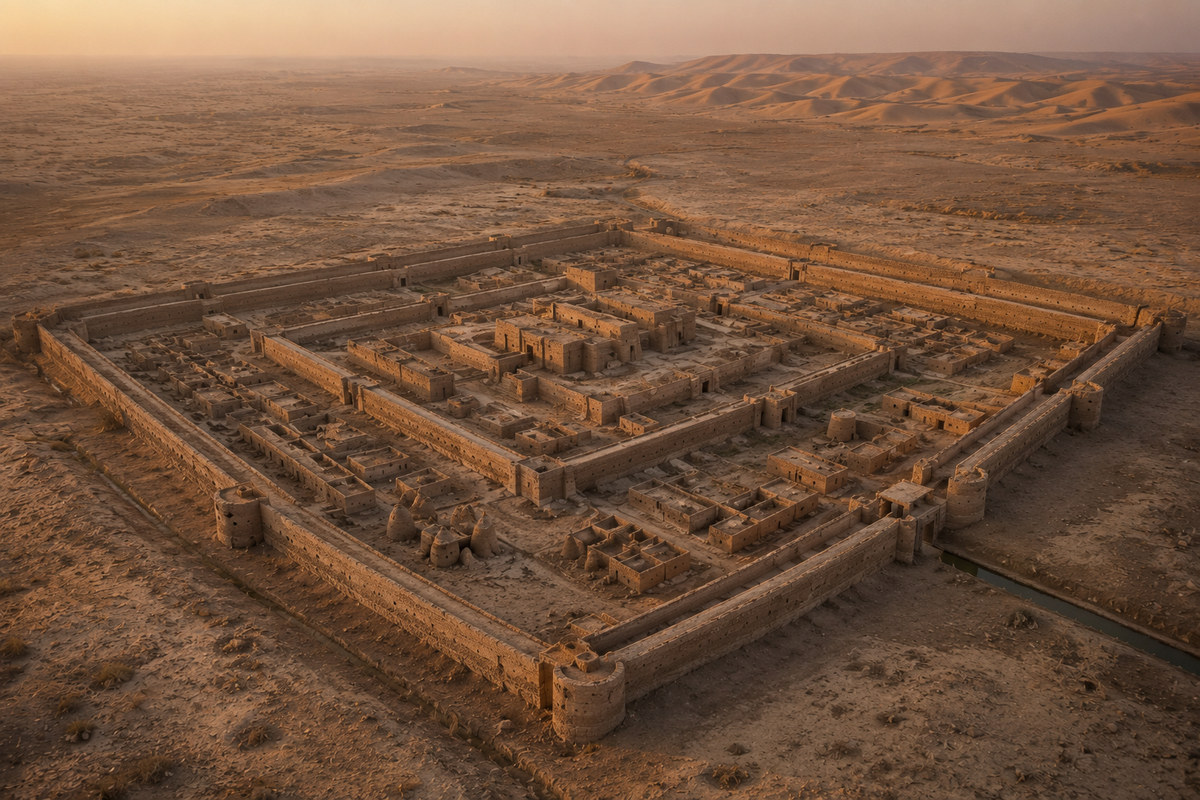
For a civilization that ran cities, moved water through desert canals and traded lapis lazuli from Afghanistan to Mesopotamia, the Bactria-Margiana Archaeological Complex is strangely absent from the story most people know. Flourishing across the oases of what is now Turkmenistan, Uzbekistan and northern Afghanistan from roughly 2300 to 1600 BC, the BMAC, also called the Oxus Civilization, sat squarely astride the only practical corridor between the Eurasian steppe and the Indian subcontinent. For most of the twentieth century that geography made it the obvious candidate for a starring role in the single most argued-over migration in Old World prehistory: the arrival of the Indo-Aryans, and with them the Indo-European languages, into India. The dominant reconstruction had steppe pastoralists sweep down, take over the sophisticated BMAC, and then push south as an Aryanized Oxus population carrying a new language, new gods and a sacred drink into the collapsing world of the Indus Valley. It is a clean story. Ancient DNA has now made it possible to test, and the answer it returns is stranger and sharper than the story it replaces: the steppe ancestry that reached India did not come through the BMAC as a people. It went around it.
Three Ways to Be Wrong About the BMAC
The competing positions make different, checkable predictions. The old Kulturkugel model, in which incoming steppe people absorbed the BMAC and then carried its Aryanized culture south, predicts that the BMAC population should itself carry a substantial steppe layer, and that modern South Asians should trace a large part of their ancestry back to that BMAC. A stronger indigenist reading, which denies any meaningful steppe input at all, predicts that neither the BMAC nor South Asians should show a steppe signal worth the name. The reconstruction that the genetics actually supports is a third one, and it splits the difference in an unexpected place: the main BMAC population carried essentially no steppe ancestry and contributed little to later South Asians, while the steppe ancestry that did reach India travelled through the region as a thin stream of migrants who admixed at the edges of the Oxus world without ever demographically becoming it. Four questions decide between these: what the BMAC was actually made of, whether the steppe passed through it or around it, whether it seeded South Asia, and where, if anywhere, its ancestry still survives.
An Iranian-Farmer Civilization
The first question is the most basic: what was the BMAC, genetically? Modelled against the deep West Eurasian and South Asian ancestral streams, the answer is unambiguous and it contains no steppe. The type site of Margiana, Gonur Tepe, along with the Bactrian centres of Sappali Tepe, Dzharkutan and Bustan, all resolve as overwhelmingly Iranian-Neolithic-farmer in ancestry, roughly two-thirds, with a modest Anatolian-farmer component, a Caucasus hunter-gatherer layer of ten to twenty percent, and only a light trace of the deep South Asian ancestry that dominates the subcontinent. No steppe source is needed to fit them; the model reaches a good fit without one.
This is the profile of a population built out of the Neolithic farming world of the Iranian plateau and its expansion north into the Central Asian oases, not one built out of the steppe. It is exactly what the deep southwestern Asian ancestry cline, running from more Anatolian-farmer ancestry in the west to more Iranian-farmer ancestry in the east, predicts for its far northeastern end. The BMAC was the flowering of that cline in the desert oases, and its people were the descendants of the Eneolithic farmers of Turan who preceded them at Geoksyur, Namazga and Anau, not newcomers from anywhere.
Sitting With Its Neighbours, Far From the Steppe
A model can be argued with; a plain distance ranking is harder to dispute. Ranking every population in the dataset by G25 distance from Gonur Tepe places its nearest neighbours exactly where continuity predicts: the other BMAC sites of Bactria first, then the Eneolithic Turan cultures that preceded it, then eastern Iranian Shahr-i-Sokhta, then the Iranian Neolithic itself. The nearest modern populations, the Balochi and Brahui, sit at about 0.07, the Kalash of the Hindu Kush further out at 0.10, and the Punjabi and Sindhi of the northwest beyond that. The Sintashta steppe pole, the source of the ancestry the old model wanted to route straight through the BMAC, sits at the very bottom of the list, more than seven times further from Gonur than Gonur's Bronze Age Bactrian sisters are.
Whatever the BMAC was, it was not a steppe population wearing an oasis costume. It was an Iranian-farmer civilization sitting in a tight cluster of Iranian-farmer relatives, with the steppe as its most distant major reference, not its recent ancestor.
The Steppe That Went Around It
Here the geography becomes genuinely surprising. To reach the northwestern subcontinent from the steppe, a migrant must cross Turan, the BMAC's own territory; there is no other practical route. If the steppe ancestry that reached South Asia had truly passed through the BMAC as a people, mixing as it went, then the Sintashta steppe population should sit closer to the BMAC it traversed than to the distant South Asians at the end of the journey. It does not. Sintashta's nearest neighbours are, predictably, other steppe groups, the Andronovo of Kazakhstan and the Altai. But its next nearest neighbours are the Kalash and the Punjabi of the northwestern subcontinent, sitting closer to it than the Gonur and Sappali BMAC populations do.
Read that carefully, because it is the whole argument in a single comparison. The steppe pole is genetically nearer to the South Asians it seeded, a thousand or more kilometres away across the mountains, than it is to the Central Asian farmers whose land it physically had to cross to get there. A population that had genuinely admixed its way through the BMAC would show the opposite pattern. This is what demographic bypass looks like in coordinate space: the steppe stream moved through Turan without dissolving into it, then admixed at the far end.
Real Steppe, Only in the Outliers
None of this means the steppe never touched the BMAC at all; it means the touch was individual, not populational. A caveat has to be handled honestly first. When the main BMAC populations are modelled with the very basal Iranian Neolithic proxy from Ganj Dareh, the model returns an apparent steppe share of around eighteen percent, which looks at first like real steppe contact. It is not. The tell is a control: the Eneolithic populations of Turan, Geoksyur and Namazga, which predate any possible steppe contact by well over a thousand years, return the same twenty-one to twenty-four percent apparent steppe under the identical model. Since those pre-steppe farmers cannot possibly carry real steppe ancestry, that shared band is a proxy artifact, the model borrowing the steppe pole to supply Caucasus and northern ancestry that the too-basal Iranian source cannot. The main BMAC population sits inside that same artifact band and shows no genuine excess above it.
The genuine steppe signal appears only when specific outlier individuals are modelled on their own. At Sappali Tepe and Dzharkutan, single outlier burials break clearly above the artifact floor to around thirty percent, and one Gonur outlier reaches close to fifty percent steppe, a genuinely mixed individual in a population that was not. These are the people the original 2019 analysis flagged: steppe ancestry appearing in scattered individuals at BMAC sites around the turn of the second millennium BC, the leading edge of a migration that was passing through rather than settling in. Other outliers at the same sites lean the opposite way, toward high deep-South-Asian ancestry, the Indus-periphery migrants who were also moving through these cosmopolitan oases. The BMAC towns were contact zones. Their main population stayed put and stayed Iranian-farmer.
Did the BMAC Seed South Asia? The Collinearity Trap
The decisive question for the Indo-Aryan story is whether the BMAC contributed the bulk of modern South Asian ancestry, as the old model required. A naive test seems, at first, to say yes for some groups, and it is worth walking into the trap deliberately because it is instructive. When Gonur is offered as a fourth source alongside a proper Indus-periphery pole, a steppe pole and a deep South Asian pole, the eastern and Gangetic groups behave sensibly: Gujarati and Bengali take zero percent BMAC, and mainstream Punjabi only eight percent. But the far northwestern, Iranian-plateau-shifted groups appear to load heavily on BMAC, with Balochi and Brahui returning sixty percent and the Kalash and Pashtun thirty to thirty-five.
Those large numbers are not what they look like. The problem is the same collinearity trap this site has documented in its Pashtun and Roma coverage: the BMAC and the Indus-periphery pole are both overwhelmingly Iranian-farmer populations, near-degenerate as sources, so a model offered both cannot reliably tell them apart and simply splits the Iranian-farmer signal arbitrarily between them. For the groups that sit furthest along the Iranian-plateau axis, that split happens to fall toward BMAC. It is measuring their position on a shared farmer cline, not descent from the Oxus Civilization specifically. To decide the question properly, the two Iranian-farmer sources have to be separated by something they genuinely differ on.
The Anatolian-Farmer Ratio: The Decisive Test
That something is the Anatolian-farmer fraction, and it is the same discriminator the original study used to formally reject the BMAC as a South Asian source. Because the BMAC sits further west on the farmer cline than the Indus-periphery populations do, it carries markedly more Anatolian-farmer ancestry: around ten percent at Gonur and fifteen at Sappali. The Indus-periphery profile from Shahr-i-Sokhta carries under four percent, and every modern South Asian group tested carries the same low fraction, from six percent in the Sindhi down to essentially zero in the Kalash.
This is the ratio the BMAC fails. Modern South Asians, including the very Balochi and Kalash that the naive model tried to route through the Oxus, carry two to four times too little Anatolian-farmer ancestry to descend substantially from the BMAC. They pattern instead with the low-Anatolian Indus periphery. The BMAC's ratio of Anatolian-to-Iranian farmer ancestry is simply too high for it to be a major source for South Asians, exactly as the chi-square test in the peer-reviewed literature concluded. The Iranian-farmer ancestry that South Asians do carry in quantity entered the subcontinent through the Indus-periphery cline, not through the Oxus.
Where the BMAC Actually Survived
If the BMAC did not flow south into India, it did not simply vanish either. It stayed home. Modelled as a mixture of BMAC-derived farmer ancestry, steppe, and the East-Eurasian ancestry that the later Turkic expansions carried west, the modern populations sitting on the old BMAC territory still carry roughly half their ancestry from the Oxus farmer stock beneath their later layers. Tajiks come out around fifty percent BMAC-derived with a quarter steppe and a quarter East-Eurasian; Turkmen are similar with a heavier Turkic overlay; Uzbeks, the most Turkicized of the three, retain a still-substantial thirty-eight percent.
The purely Iranian-farmer core of the BMAC is, if anything, best preserved in the low-steppe, low-East-Asian populations of the Iranian plateau margins, the Balochi and Brahui, which sit closest of all living peoples to Gonur in raw distance precisely because they share so much Iranian-farmer ancestry with it, even as the Anatolian-ratio test shows they descend from the Indus cline rather than the BMAC itself. The honest picture is that the BMAC's genetic legacy is a Central Asian one. Its people were absorbed, over the following three thousand years, into the Iranian-speaking and then Turkic-speaking populations of the same oases they had always lived in, rather than exported to the Ganges.
Limits and Caveats
Several caveats apply and are worth stating plainly. The Iranian Neolithic proxy from Ganj Dareh is basal enough to inflate the apparent steppe share of pre-steppe populations, which is precisely why the pre-steppe Eneolithic control was used to identify that inflation rather than reading it as real; the composition percentages should be treated as directional, with the distance rankings and the qualitative pattern weighted more heavily than any single NNLS figure, as throughout this site. The BMAC outlier individuals rest on one or two genomes apiece and are suggestive of a process, not a precise census of it. The Anatolian-farmer ratio test is the load-bearing result here, and it is the one that reproduces the peer-reviewed conclusion most directly; the naive four-source model that appears to hand the northwestern groups a large BMAC share is shown, by that ratio test, to be a collinearity artifact rather than evidence of Oxus descent. Finally, G25 coordinate modelling cannot by itself resolve the archaeological and linguistic questions about the BMAC's culture, religion or language; it can only speak to ancestry, and on ancestry its verdict on the Indo-Aryan question is narrow but firm.
Conclusion
The BMAC was never the demographic bridge the old model needed it to be. It was an Iranian-farmer civilization, roughly two-thirds descended from the Neolithic farmers of the Iranian plateau, carrying a Caucasus and modest Anatolian-farmer layer and essentially no steppe ancestry in its main population. The steppe stream that carried Indo-Aryan speech toward India crossed its territory without dissolving into it, sitting genetically closer to the South Asians it eventually seeded than to the oasis farmers it physically passed among, and touching the BMAC only through scattered outlier individuals. When the collinearity between the BMAC and the Indus periphery is broken by the Anatolian-farmer ratio, the BMAC fails the test to be a major South Asian source, and modern South Asians resolve as a mixture of the low-Anatolian Indus cline, deep South Asian ancestry and steppe, with the Oxus Civilization contributing little. Its own descendants are still there, in the Tajiks and Turkmen of the same oases, carrying half the BMAC beneath their later steppe and Turkic layers. The forgotten civilization was not a conduit and not a dead end. It was a place the Indo-Aryans passed by on their way somewhere else, and then, mostly, stayed exactly where it had always been.
Turkmenistan_BA_Gonur_Tepe_(n=12),0.079771083,0.078872833,-0.11099925,0.00831725,-0.098582333,0.021033083,0.0070111667,-0.006269,-0.063879583,-0.0407905,-0.0022328333,0.0026475833,-0.0055005,-0.0064683333,0.018310833,0.02489375,-0.0047915833,0.00073891667,0.0045461667,-0.023250833,-0.0020796667,-0.01431275,-0.0016536667,-0.015755167,0.011176667
Uzbekistan_BA_Sappali_Tepe_(n=12),0.07739975,0.086996917,-0.11659317,-0.0027993333,-0.089426917,0.01912725,0.0076768333,-0.00471125,-0.06142525,-0.036097917,-0.00175925,0.0021480833,-0.0034315,-0.00573425,0.015574,0.029832833,0.000076083333,0.0016575,0.0032785833,-0.019342833,0.00093583333,-0.013859417,0.0014070833,-0.015032167,0.0097594167
Uzbekistan_BA_Dzharkutan_(n=7),0.081302143,0.076454857,-0.11006529,0.0094131429,-0.097512714,0.023267571,0.0047,-0.0089338571,-0.062525857,-0.039571286,0.0016935714,-0.0010277143,-0.00012742857,-0.012130429,0.020008857,0.026537,-0.0060907143,0.0029862857,0.0027112857,-0.019634429,0.00071314286,-0.010704857,-0.0014438571,-0.014356429,0.0090667143
Uzbekistan_BA_Bustan_(n=6),0.082331667,0.080903833,-0.11351333,0.0062446667,-0.093043,0.019987,0.0068153333,-0.0022306667,-0.0583915,-0.034503333,0.000839,0.001049,0.003543,-0.0057113333,0.0099755,0.0221645,-0.0081273333,0.0036528333,0.0063686667,-0.019592667,-0.0014973333,-0.011314333,-0.0044985,-0.020083,0.0069455
Turkmenistan_Eneolithic_Geoksyur_(n=18),0.079929222,0.075826167,-0.11562939,0.022376722,-0.1087895,0.028013056,0.0110325,-0.0061408333,-0.0787985,-0.051228611,-0.0013983333,0.000691,-0.0048066111,-0.011246778,0.023886611,0.03012,-0.0077361667,0.0041315,0.0044762222,-0.021974944,-0.0016567778,-0.013114056,-0.0024923333,-0.022051333,0.010245278
Turkmenistan_Eneolithic_Namazga_Tepe_(n=2),0.0762615,0.080227,-0.112382,0.0137275,-0.098634,0.0242635,0.011633,-0.0107305,-0.0759805,-0.045741,-0.000081,0.001948,-0.0141225,-0.008051,0.0254475,0.021546,-0.0157115,0.000887,0.00817,-0.027263,-0.0001245,-0.0128595,0.0016025,-0.015785,0.011556
Iran_EBA_Shahr-i-Sokhta_(n=6),0.0736055,0.062624333,-0.1309865,0.021910167,-0.10848183,0.028400167,0.0085778333,-0.0026921667,-0.0638455,-0.036902833,-0.0050611667,0.0005995,-0.0060206667,-0.0083718333,0.021127,0.031313333,-0.0025208333,0.002196,0.0030586667,-0.024595167,0.007965,-0.016961,-0.0021363333,-0.019018667,0.0136515
Iran_EBA_Shahr-i-Sokhta_(IVC_Profile)_(n=5),0.0455292,-0.0331064,-0.1690254,0.0957374,-0.103404,0.0561686,0.0075672,0.0043384,0.007772,0.0049936,-0.0033452,0.006684,-0.0024382,-0.0029452,0.0078446,0.0104482,-0.0039116,0.0024324,0.0004778,-0.0146824,0.0011976,-0.0132554,0.0003698,-0.0097362,0.0012452
Turkmenistan_BA_Gonur_Tepe_o1_(n=1),0.093335,0.037575,-0.038843,0.099484,-0.099095,0.036814,-0.002115,-0.010384,-0.061357,-0.06196,0.008119,-0.001798,0.007582,-0.033993,0.024158,0.013392,-0.014864,-0.003294,0.008296,-0.015257,-0.004866,0.006059,0.006409,-0.001687,0.004071
Turkmenistan_BA_Gonur_Tepe_o3_(IVC_Profile)_(n=2),0.0569115,0.007109,-0.162539,0.068476,-0.112944,0.041136,0.0094,0.001846,-0.020452,-0.0112075,0.010474,0.0059945,0.000966,-0.0015135,0.0088895,0.01074,-0.0046285,0.0048145,0.0060965,-0.014257,0.010045,-0.0201555,0.002773,-0.0209665,0.003892
Uzbekistan_BA_Sappali_Tepe_o1_(n=1),0.08992,0.098506,-0.054305,0.000646,-0.047701,0.00502,-0.00329,-0.002308,-0.030883,-0.015308,0.001624,0.004346,0.001487,-0.010872,0.011943,0.006364,-0.004172,0.005321,0.012696,-0.012881,-0.004617,-0.000247,-0.001972,0.002771,0.006706
Uzbekistan_BA_Dzharkutan_o_(n=2),0.1058555,0.0934285,-0.0409175,-0.021318,-0.040777,0.0005575,0.005405,-0.0019615,-0.0608455,-0.0276995,-0.0047095,0.012739,-0.020069,0.003785,0.006582,-0.014187,0.015972,-0.004561,-0.011941,0.0208225,0.011542,0.002473,-0.0012325,-0.006326,-0.0034725
Iran_N_Ganj_Dareh_(n=7),0.044065857,0.066154714,-0.15634357,0.0068752857,-0.124067,0.02263,0.015678714,-0.00039542857,-0.082101714,-0.054827,-0.0010208571,-0.0017127143,0.0049484286,-0.0081198571,0.033833143,0.055801143,-0.0064821429,0.0092844286,0.0096788571,-0.035034857,0.0075402857,-0.029800286,-0.011972571,-0.037320429,0.022187714
Turkey_Barcin_LN.SG,0.112685,0.182795,0.010936,-0.10013,0.055087,-0.046854,-0.00235,-0.002769,0.046836,0.081642,0.008607,0.010191,-0.015758,0.006193,-0.040173,-0.020021,0.00352,0.000507,0.011816,-0.014132,-0.008735,0.006306,-0.010969,-0.00494,-0.00467
Georgia_Mesolithic_Trialetian_Kotias_Klde_(CHG)_(n=1),0.091058,0.102568,-0.083344,-0.00323,-0.08617,0.020638,0.024911,-0.001846,-0.128236,-0.074717,-0.006333,0.023979,-0.054856,0.004404,0.026601,-0.03275,0.02386,-0.013429,-0.022249,0.034767,0.033815,-0.007048,0.006532,-0.025787,-0.002036
Onge_(n=40),-0.022309375,-0.24349855,-0.131568,0.09481665,0.0296439,-0.003520925,-0.00884805,0.006270925,0.0534217,0.02351755,0.0231769,0.00328585,-0.001661325,0.009502825,-0.01318855,-0.013988225,0.0103069,-0.000877325,-0.00620015,0.0312024,-0.002467525,0.008430025,-0.014737275,0.001578475,0.004316975
Chelyabinsk_MLBA_Sintashta_(n=32),0.12527653,0.1159925,0.057569781,0.078509187,0.011655812,0.028603719,0.0054932187,0.0040022187,-0.017595375,-0.027551812,-0.002512,0.0015314687,-0.0034238125,-0.021761563,0.022313344,0.013408125,-0.0040745,0.00036025,-0.00054603125,-0.0005744375,-0.0065938125,0.0022064375,0.0027537188,0.007244875,-0.0042735938
Kazakhstan_MLBA_Andronovo_(Alakul)_Maitan_(n=7),0.12374214,0.11939729,0.052258143,0.074013143,0.011694286,0.029841286,0.0074192857,0.0043517143,-0.013995286,-0.025539143,-0.0028998571,0.00047114286,-0.004651,-0.020958143,0.024158,0.0095464286,-0.006184,-0.00081457143,-0.0011671429,0.001197,-0.0050624286,0.0016602857,-0.0029228571,0.0034082857,-0.0047384286
Nganasan_(n=62),0.045400694,-0.40860324,0.15469853,0.0014430806,-0.158784,-0.088484726,0.027954694,0.041819613,0.028963177,0.013135661,0.10039789,0.0094730968,-0.0045509839,-0.027262565,-0.020434645,-0.0095165323,0.0029,0.013976645,0.025005758,-0.00059708065,0.042173597,-0.012738226,0.032434048,-0.00053637097,0.013491097
Punjabi_Jat_Sikh_(n=60),0.07764635,0.01067995,-0.090471233,0.08131525,-0.06607895,0.0471278,0.0022520833,0.0040075333,-0.0015885167,-0.0097799333,-0.0052208,-0.00036721667,-0.00089193333,-0.0082734833,0.012165067,0.0098889833,-0.0035724833,0.00069045,0.0019797833,-0.0097567167,-0.0025226667,-0.0049956167,0.00153445,-0.0012752667,0.001892
Sindhi_(n=9),0.067155667,-0.003272,-0.11757767,0.073177444,-0.073449556,0.044653556,0.00018277778,0.0034357778,0.00095433333,-0.0011338889,-0.0068203333,-0.00099911111,-0.00079311111,-0.0065447778,0.0092291111,0.014923778,0.0044474444,0.00061933333,0.002458,-0.010074333,0.000083,-0.0066773333,-0.0013831111,-0.0031327778,0.0031533333
Kalash_(n=23),0.083882609,0.02499087,-0.084032261,0.066594174,-0.071678783,0.040305739,0.0031163043,0.0020167391,-0.030927565,-0.025156565,-0.005591913,-0.00049508696,-0.0023915217,-0.010902087,0.016611,0.0087623478,-0.013820739,0.0021041304,0.00067213043,-0.012832261,-0.0039224783,-0.0053922609,0.0028615217,-0.0034262609,0.0033529565
Pashtun_Yusufzai_(n=41),0.07928822,0.019855585,-0.088993341,0.058529293,-0.065394463,0.037963317,0.0035873415,0.0029717805,-0.014204927,-0.01297961,-0.0052042683,0.000095170732,-0.00086539024,-0.0086355122,0.010920512,0.013597927,-0.00083619512,0.00013743902,0.0018570244,-0.0081602927,-0.0035940488,-0.005495,0.0026392683,-0.0030246098,0.0035950244
Balochi_Pakistan_(n=17),0.070302412,0.050179176,-0.10235482,0.032832,-0.074004706,0.032285647,0.0054879412,0.0019139412,-0.023171294,-0.020549824,-0.0040692941,-0.0019481765,0.0036115882,-0.0088967647,0.017507824,0.029637647,-0.011351118,0.0036292941,0.0073791765,-0.028153118,-0.000991,-0.018409647,0.00061623529,-0.018974941,0.015349
Brahui_(n=23),0.069580609,0.049937652,-0.1023473,0.031822522,-0.073498783,0.029404739,0.006253087,0.0020066957,-0.021377304,-0.020394565,-0.0028383478,-0.0032839565,0.0055263478,-0.010202,0.016221565,0.030518696,-0.0091155652,0.0045332174,0.0059023043,-0.026229957,-0.00019526087,-0.015639348,-0.00072865217,-0.016911739,0.013432696
Gujarati_(n=107),0.055773355,-0.050795411,-0.15153554,0.10751143,-0.079971701,0.062951112,-0.00085873832,0.011671654,0.031217607,0.016973542,-0.0064621308,0.00071150467,-0.001946486,-0.00010421495,0.0012329065,0.00029120561,-0.0011612804,0.000097074766,0.000052906542,-0.0055938411,0.0023183178,-0.0039441589,0.0019454766,0.0010348692,-0.0037043458
Bengali_(n=35),0.041659286,-0.12351734,-0.14136629,0.094712857,-0.051174343,0.062383914,-0.0018464286,0.0095138857,0.038374543,0.024784086,-0.0054423714,0.00018417143,-0.0014101714,0.00089254286,-0.0037186571,-0.0058907714,0.0034756,-0.0011872571,-0.0019788286,0.0034980857,0.0007416,0.0039887429,0.0037819143,0.0025442571,0.0054194857
Kashmiri_Pandit_(n=7),0.071383286,-0.013056857,-0.10963443,0.074243857,-0.069947286,0.046335714,0.0049351429,0.0043514286,-0.005756,-0.0047901429,-0.0086762857,-0.0012631429,0.00014871429,-0.0034602857,0.0083952857,0.0052655714,-0.0011364286,0.001828,0.0010235714,-0.0055205714,0.000606,-0.0033561429,0.0043491429,0.0019278571,-0.00094085714
Tajik_(n=16),0.083019563,-0.040367375,-0.020765188,0.0146965,-0.03983425,0.012271125,0.005977875,0.0030574375,-0.020682437,-0.012938813,-0.011955875,-0.00167675,0.0025738125,-0.0098744375,0.006056375,0.011046438,0.0001956875,0.000958,0.001312,-0.002860875,-0.007619375,-0.001808375,0.000185,0.00105425,0.003120875
Turkmen_(n=55),0.083070145,-0.045384909,-0.008708,-0.0050681636,-0.041551727,-0.0031337455,0.0062255455,0.0036712182,-0.017700564,-0.010728655,-0.0091055636,-0.0010654909,0.0013892182,-0.0035256727,0.0024503273,0.0051275273,-0.0013986909,0.0004284,0.00068107273,-0.0024807091,-0.0075095091,-0.0021200545,-0.0036593636,-0.0019169455,0.0025756545
Uzbek_(n=18),0.074870389,-0.11311861,0.0024094444,0.0086851111,-0.033784056,0.0058257222,0.0098181667,0.0060638333,-0.014884833,-0.0088181667,-0.016644833,-0.002198,0.0026015556,-0.0044421111,0.0049161111,0.0047659444,-0.0021295556,-0.0013865,0.000908,0.00013911111,-0.0091021111,-0.00078322222,-0.0050599444,0.0011982778,0.0023218889
- Narasimhan et al. The formation of human populations in South and Central Asia, Science, 2019, on the BMAC as a predominantly Iranian-farmer population carrying no steppe ancestry and contributing little to later South Asians. science.org/doi/10.1126/science.aat7487
- Narasimhan et al. The Genomic Formation of South and Central Asia, bioRxiv preprint, 2018. biorxiv.org/content/10.1101/292581v1
- Reich Lab Full text and supplementary data for Narasimhan et al. 2019. reich.hms.harvard.edu, eaat7487 full text
- Sarianidi Excavations at Gonur Tepe and the definition of the Bactria-Margiana Archaeological Complex, on the archaeology, dating and material culture of the Oxus Civilization.
- Davidski Global25 coordinates dataset.
- Vahaduo G25 analysis tool used for NNLS modelling.
- Moriopoulos 2026 collection Aggregated Global25 population averages, including the Gonur Tepe, Sappali Tepe, Dzharkutan and Bustan BMAC genomes, the Eneolithic Turan comparanda, the Indus-periphery and steppe references, and the modern Central and South Asian populations used in this article.