
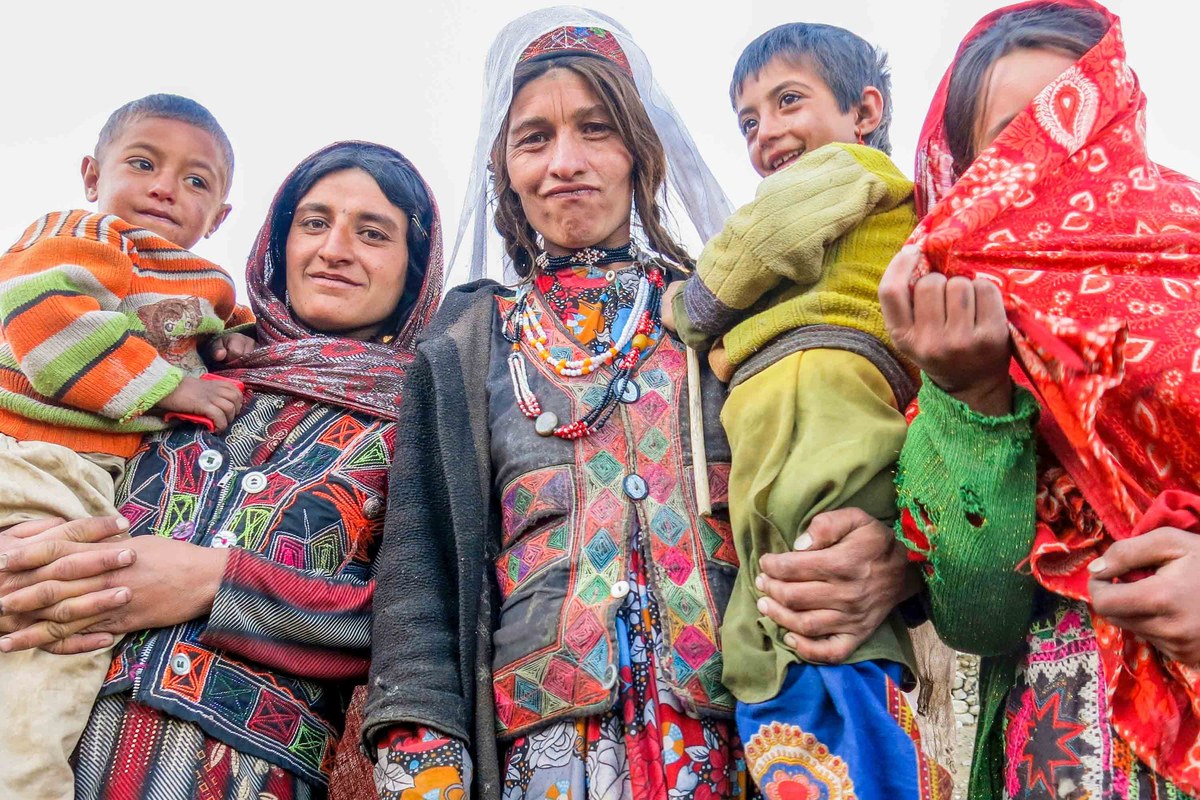
In the high valleys of the Pamirs and the Zarafshan, a handful of communities still speak languages that belong to the Eastern Iranian branch that once covered a much wider swath of Central Asia: the Wakhi and their Pamiri neighbours in the Wakhan corridor and Gorno-Badakhshan, and the Yaghnobis of the upper Zarafshan, whose language is the last living descendant of Sogdian, the lingua franca of the Silk Road. Around them, the plains and river valleys of the same region were repeatedly overrun by Turkic and Mongol expansions that left the modern Uzbek and Turkmen populations with a substantial East Asian genetic layer their highland neighbours simply do not carry. Geneticists have called the Yaghnobis and Pamiris living museums. The G25 data lets that label be measured directly, and it holds up remarkably well.
Refugia in a Corridor of Empires
The Pamir languages, spoken by the Wakhi, Shughni, Rushani, Sarikoli, Ishkashimi and several smaller communities, and Yaghnobi, spoken in the valleys of the upper Zarafshan, are the last living representatives of the Eastern Iranian branch of Indo-European in Central Asia, alongside Ossetic in the Caucasus and Pashto further south. Yaghnobi in particular is not simply related to Sogdian, the administrative and commercial language of pre-Islamic Central Asia; it is its direct linguistic descendant, often labelled Neo-Sogdian in the academic literature. Its speakers are the closest thing that exists today to a living remnant of the Sogdian merchants who once dominated the Silk Road between Samarkand and China.
Both communities owe their survival to the same geography. When the Arab conquest reached Sogdia in the eighth century, the ancestors of the Yaghnobis withdrew into the narrow, still largely roadless gorge of the Yaghnob River rather than assimilate on the plains. The Wakhi and their Pamiri neighbours occupied one of the most inaccessible corridors in Asia, the high valleys that connect the Pamir, the Hindu Kush and the Karakoram, a terrain so difficult that it channelled trade and armies alike along a narrow, controllable route rather than allowing free movement through it. Later empires, the Kushans, the Sogdian trading network itself, the Turkic khaganates, the Mongol conquest, and successive Uzbek and Turkmen tribal confederations, all passed through or around the lowlands of the same region. The mountain valleys absorbed comparatively little of what they brought.
What the Published Literature Already Found
The genetic case for a comparatively undiluted Eastern Iranian layer in these populations was made well before this analysis. Guarino-Vignon and colleagues, comparing modern Yaghnobis and Tajiks against a panel of ancient Central Asian genomes, modelled the Yaghnobi gene pool as roughly 93 percent derived from an Iron Age individual from Turkmenistan, with the remaining 7 percent attributable to an East Asian related Baikal Bronze Age source. An earlier study by Cilli and colleagues, based on uniparental markers collected directly in the Yaghnob valley, had already established that the Yaghnobis show reduced genetic variability consistent with long-term isolation and a distinct maternal lineage profile from their neighbours. On the Wakhi side, a 2024 whole genome study by Xu and colleagues found the Pamirian Wakhi to derive more than 85 percent of their ancestry from West Eurasian sources, split between a European-related and a South Asian related component, with the remaining share coming from Siberian and East Asian sources, a composition the authors explicitly linked to a highland adaptation history distinct from their Turkic neighbours. Independently, Davidski's own modelling on the Eurogenes blog put Pamiri Tajik steppe-related ancestry at roughly half their genome, comparing them directly to the Iron Age Sarmatians, themselves Eastern Iranian speakers of the Pontic-Caspian steppe.
Reproducing the Guarino-Vignon style model directly in G25, using the same Iron Age Turkmenistan genome (dated to roughly 852 BCE) against a modern Mongol reference for the later layer, returns 91.8 percent ancient homeland to 8.2 percent Turko-Mongol for the Yaghnobis, close enough to the original 93/7 result from a completely different modelling pipeline to serve as a useful cross-check on both methods. Extending the same two-source model across the wider region shows a consistent gradient rather than an isolated result. Pamiri Rushan and Kalash sit in the same 88 to 90 percent range as the Yaghnobis. Wakhi and the wider Pamiri Sarikoli average sit a little further along, at 83 and 80 percent respectively, still solidly on the ancient-homeland end of the scale. The lowland, historically Turkic-speaking populations of the same region tell a completely different story: Turkmen drop to 68 percent ancient homeland, Uzbek to 55 percent, and the Kyrgyz of Tajikistan, a genuinely steppe-nomadic population by both language and history, to just 27 percent.
Where the Isolates Actually Sit
Ranking every population in the Global25 dataset by Euclidean distance from the Yaghnobi average confirms the same pattern from a different angle. The single closest population is Pamiri Rushan, a Pamir-language community from a different valley system entirely, at a distance of just 0.0266. A Kushan-era individual from Tajikistan, dated to roughly the first century BCE to the first century CE and therefore some eight centuries younger than the Iron Age Turkmenistan genome used in the proximal model, sits almost as close at 0.0335, providing an independent chronological anchor for the same continuity. Tajik Badakhshan, Wakhi and Kalash all cluster in the 0.04 to 0.09 range. By contrast, Turkmen, the Sintashta steppe source population itself, Uzbek, and the Kyrgyz of Tajikistan sit progressively further away, with the Kyrgyz over ten times more distant from the Yaghnobis than the Yaghnobis' own closest neighbour.
The gap is not subtle. A Kushan-period genome recovered in Tajikistan, separated from the modern Yaghnobis by roughly two thousand years, sits closer to them than the Uzbek and Turkmen populations who share the same country and region today. Whatever demographic disruption the Turkic and Mongol periods brought to Central Asia, it appears to have passed the Yaghnob valley and the high Pamir corridor by, or at least touched them far more lightly than it touched the plains.
The Distal Picture, and Where Wakhi and Yaghnobi Diverge
A five, then four, source distal model, decomposing each population into an Iranian farmer base (Ganj Dareh), a steppe component (Sintashta), a deep South Asian component (AASI, proxied by the Onge), and an East Asian component (modern Khalkha Mongol), makes visible a genuine difference between the two isolate populations that the two-source model alone does not capture.
The Iranian farmer and steppe shares are broadly similar across the whole highland cluster, in the 30 to 40 percent and 45 to 56 percent range respectively, with the Kushan-era Tajikistan genome sitting squarely inside that same range two thousand years earlier. The AASI component tells a more interesting story. Yaghnobi comes out at essentially zero AASI in this model, while Wakhi sits at 12.5 percent and the Pamiri Sarikoli average at a similar level. This lines up with the geography: the Wakhan corridor and the wider Pamiri settlement area sit directly astride routes that connect to the Indus periphery, while the Yaghnob valley, tucked into the upper Zarafshan on the Sogdian side of the Central Asian watershed, never sat on a comparable route into South Asia. It is also broadly consistent, at the level of overall pattern rather than exact figures, with the Wakhi whole-genome study's finding of a substantial South Asian related component in their ADMIXTURE analysis, though the two methods are not directly comparable and should not be read as confirming identical percentages.
The East Asian share is where the two isolate populations converge again, both sitting in the 7 to 13 percent range alongside the Kushan-era anchor's 6.8 percent, while Turkmen, Uzbek and the Kyrgyz of Tajikistan climb to 32, 42 and 73 percent respectively in the same model. Whatever separates Wakhi from Yaghnobi in their exposure to South Asia, both were shielded from the region's later Turko-Mongol demographic layer to almost exactly the same degree.
Limits and Caveats
Several caveats apply. The Iron Age Turkmenistan genome used as the ancient homeland proxy in the two-source model is a single low-to-moderate coverage individual, not a population average, so its use should be read as directionally reliable rather than as a precise reference point, in line with the original Guarino-Vignon study's own treatment of the same genome. The Onge remain an imperfect stand-in for the true, unsampled AASI source, which means the absolute AASI percentages here are best compared relatively across the populations in this analysis rather than treated as exact ancestry fractions. The Iran_N and Steppe sources used in the distal model share deep ancestry through the Caucasus hunter-gatherer component, a collinearity noted in earlier articles on this site, which tends to inflate the apparent Steppe share somewhat across every population modelled this way, isolates and Turkic-speaking populations alike, so the relative gap between groups is more informative than any single absolute figure. Finally, the Wakhi whole-genome study's ADMIXTURE-based South Asian percentage and this article's G25-based AASI percentage are produced by different methods against different reference panels and are not numerically equivalent; the agreement noted above is a directional, not a quantitative, corroboration.
Conclusion
The label living museum, applied to the Yaghnobis and Pamiris in the published literature, holds up under direct G25 modelling. A two-source model built around a single Iron Age Turkmenistan genome reproduces, independently, the same roughly 90 to 10 split published for the Yaghnobis by Guarino-Vignon and colleagues, and extends cleanly across the wider highland cluster: Pamiri Rushan, Kalash, Tajik Badakhshan and Wakhi all sit in the same broad range, while the historically Turkic-speaking populations of the same region, Turkmen, Uzbek, and above all the Kyrgyz of Tajikistan, carry a far heavier later layer. A Kushan-era genome recovered in Tajikistan, some two thousand years old, sits closer to the modern Yaghnobis than their own Uzbek and Turkmen neighbours do today. The one place the two isolate populations part ways is South Asian contact: Wakhi and the wider Pamiri cluster carry a real AASI signal that the Yaghnobis, tucked away on the Sogdian side of the watershed, do not. Language, geography and genetics agree here to an unusual degree: these are communities whose isolation was real, and whose genomes recorded it.
Yaghnobi,0.1008473,0.05900215,-0.02847275,0.0241604,-0.04607,0.01865775,0.0064625,-0.0009923,-0.0358019,-0.0264789,-0.0047743,0.00031465,-0.0001338,-0.0093928,0.0133142,0.0177603,-0.00359205,0.0004624,0.0014267,-0.0110302,-0.0078486,-0.00500175,0.00148515,0.0023557,0.00355055
Wakhi,0.08607899,0.0097181499,-0.044024629,0.053074409,-0.053432883,0.028841556,0.0053491111,-0.00098629159,-0.024230627,-0.022437043,-0.0097832161,-0.0012233676,-0.00029771015,-0.014666476,0.015317421,0.011489709,-0.0029688797,-0.00045374999,-0.00076565381,-0.0064257444,-0.0066454647,-0.00085606727,0.0015166648,0.0013287564,0.0016934923
Pamiri_Sarikoli,0.08707468,-0.00316844,-0.03671644,0.04737764,-0.0495846,0.02845242,0.00445094,-0.0001338,-0.0241706,-0.02333354,-0.01029874,-0.00038966,-0.00111196,-0.01343746,0.01493742,0.01171826,-0.00275634,0.00062584,0.00143798,-0.00756114,-0.00589956,-0.00264118,0.00159978,-0.00022652,0.00162374
Pamiri_Rushan,0.0997375,0.046206625,-0.02630425,0.042837875,-0.04393125,0.025936875,0.005434375,-0.00164425,-0.030346125,-0.0294765,-0.008403625,-0.00086175,-0.002099875,-0.01396875,0.016914,0.013971625,-0.00299875,-0.001900375,0.00064425,-0.008941875,-0.00898425,-0.0034005,0.00143275,0.00143075,0.000553625
Pamiri_Shugnan,0.095896,0.040113375,-0.0311125,0.045583375,-0.04866275,0.02523975,0.001028125,-0.003749875,-0.02784075,-0.028519875,-0.004343875,-0.001367625,0.000594375,-0.016652375,0.01419975,0.01682225,-0.002526,0.001742,0.00216825,-0.008566625,-0.005646375,-0.00455975,0.00141725,0.003117875,0.004295875
Pamiri_Ishkashim,0.09219675,0.025134375,-0.04435875,0.051397375,-0.052009625,0.025901875,0.003525,-0.002855875,-0.02709925,-0.024920625,-0.008383375,-0.0012925,-0.001877,-0.01236875,0.0138435,0.015032375,-0.002298,0.001409375,0.00039275,-0.006440625,-0.008297875,-1.5375e-05,0.00134025,0.001867625,0.003382875
Tajik_Badakhshan,0.094369727,0.031112182,-0.036014955,0.044764864,-0.049421682,0.026862182,0.0043582273,0.00069240909,-0.028967955,-0.028577909,-0.007529,-0.000797,-0.00043918182,-0.012880136,0.016897091,0.010384227,-0.0055115909,0.000501,0.0010856364,-0.007441,-0.0076115,-0.0037150455,0.0018543636,0.0016814091,0.0013335455
Turkmenistan_IA_852BCE,0.104717,0.094444,-0.018479,0.04522,-0.037545,0.026216,0.0,-0.003,-0.044177,-0.039545,-0.00406,0.002548,0.003271,-0.018992,0.023344,0.016839,-0.015125,-0.001014,-0.002011,-0.009755,0.000998,0.000742,0.001849,0.010001,0.000838
Tajikistan_HP_Kushan_Ksirov,0.095990667,0.070409667,-0.034443667,0.012812333,-0.048727,0.010133,-0.002115,-0.0053076667,-0.032042333,-0.020714333,0.0077403333,0.0057946667,-0.004311,-0.0097253333,0.0082793333,0.013082,0.0064756667,0.0032516667,0.011564,-0.010504667,-0.0065303333,0.00016466667,0.0013556667,-0.0071093333,0.005189
Uzbek,0.074870389,-0.11311861,0.0024094444,0.0086851111,-0.033784056,0.0058257222,0.0098181667,0.0060638333,-0.014884833,-0.0088181667,-0.016644833,-0.002198,0.0026015556,-0.0044421111,0.0049161111,0.0047659444,-0.0021295556,-0.0013865,0.000908,0.00013911111,-0.0091021111,-0.00078322222,-0.0050599444,0.0011982778,0.0023218889
Turkmen,0.083070145,-0.045384909,-0.008708,-0.0050681636,-0.041551727,-0.0031337455,0.0062255455,0.0036712182,-0.017700564,-0.010728655,-0.0091055636,-0.0010654909,0.0013892182,-0.0035256727,0.0024503273,0.0051275273,-0.0013986909,0.0004284,0.00068107273,-0.0024807091,-0.0075095091,-0.0021200545,-0.0036593636,-0.0019169455,0.0025756545
Kyrgyz_Tajikistan,0.06032625,-0.2404265,0.04063475,-0.0088825,-0.04193075,-0.00997025,0.015511,0.016153,-0.00541975,-0.00159475,-0.03264025,-0.0016485,0.00133775,-0.00488575,0.00156075,0.00242,0.002673,-0.0008235,0.00342525,0.009817,-0.01357,-0.00129825,-0.0122015,-0.001958,0.00296375
- Guarino-Vignon et al. Genetic continuity of Indo-Iranian speakers since the Iron Age in southern Central Asia, Scientific Reports, 2022.
- Cilli et al. The genetic legacy of the Yaghnobis: A witness of an ancient Eurasian ancestry in the historically reshuffled central Asian gene pool, American Journal of Physical Anthropology, 2019.
- Xu et al. Multiple-Wave Admixture and Adaptive Evolution of the Pamirian Wakhi People, Molecular Biology and Evolution, 2024.
- Cilli, Delaini et al. Ethno-anthropological and genetic study of the Yaghnobis: An isolated community in Central Asia, a preliminary study, Journal of Anthropological Sciences, 2011.
- Davidski Descendants of ancient European maidens in Central Asia's highlands, Eurogenes Blog.
- Davidski Global25 coordinates dataset.
- Vahaduo G25 analysis tool used for NNLS modelling.
- Moriopoulos 2025 collection Aggregated Global25 population averages and individual ancient genomes from published studies.