
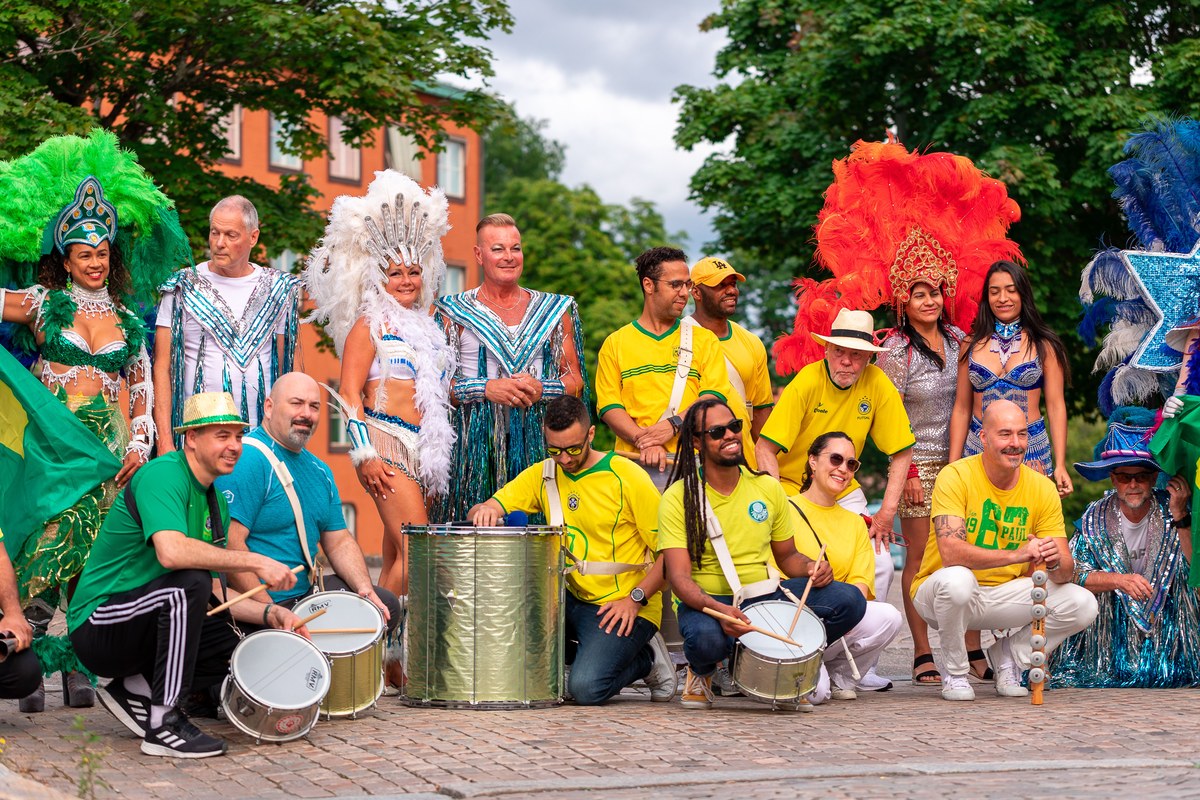
No population on Earth carries a more thoroughly documented three-way mixture than the Brazilians. Over five centuries, three continents poured their people into one country: the Native Americans who were already here, the Portuguese who came to rule, and the Africans who were brought in chains. Out of that collision came a population that the largest Brazilian genome study yet calls the most recently and most heavily admixed in the world. The autosomes of an average Brazilian are roughly three fifths European, a quarter African and an eighth Native American, but those tidy fractions hide a brutal asymmetry. The fathers were overwhelmingly European; the mothers were overwhelmingly African and Native American. The Y-chromosome and the mitochondria tell two completely different stories about the same people, and the gap between them is the genetic fingerprint of how colonial Brazil was actually made.
- The 2025 DNA do Brasil project, 2,723 high-coverage whole genomes from all five regions, puts the average Brazilian at about 59 percent European, 27 percent African and 13 percent Native American ancestry. An earlier review of 81 populations using smaller marker panels gave a similar but slightly more European picture, around 68 / 20 / 12. The Native American share is higher than older studies thought, because the new project sampled the north better.
- The mixture is strongly sex-biased, and the bias is the same in every region. Around 71 percent of Y-chromosomes (passed father to son) are European, while about 42 percent of mitochondrial lineages (passed mother to child) are African and 35 percent are Native American. The paternal line is European; the maternal line is African and Indigenous. This is the genetic record of colonial sexual coercion and asymmetric unions.
- In Global25, self-declared white Brazilians (Branco) sit almost on top of the European Latin-American cloud, close to Portugal and Spain, while self-declared mixed Brazilians (Pardo) sit far out in admixed space, with no single ancestral population anywhere near them. The nearest neighbour of the Pardo average is not a parent population at all but another admixed American group. That is what a true three-way mixture looks like.
- A three-source model rebuilds the Pardo average as roughly half Portuguese, a third African and a sixth Native American, with the African part splitting between a West-Central Bantu source (the Angola and Congo trade) and a West African one (the Bight of Benin trade). The Branco average models as overwhelmingly Portuguese with small African and Native American traces.
- The African ancestry is not one thing. Most enslaved people taken to Brazil came from West-Central Africa, today Angola and the Congo basin, with a large second stream from the Bight of Benin, today Nigeria and Benin. Bahia drew more heavily on the West African stream, the rest of Brazil more on the Bantu one.
- The Native American ancestry is mostly Tupi. The new genome project finds the Indigenous component of Brazilians is closest to Tupi-speaking groups, the people the Portuguese met first along the coast. Western Amazonian Tupi such as the Karitiana and Surui serve as clean modern reference points.
- Ancestry is not evenly spread. The south is the most European (around 82 percent), the north the most Native American (around 28 percent), and the northeast, the old plantation heartland around Bahia, the most African (over a third). The map of Brazilian DNA is a map of how the country was colonised and where the plantations and mines were.
- Admixture peaked in the 18th and 19th centuries, during the gold and diamond rush that pulled Europeans inland, not in the very first colonial moment. The Brazilian gene pool is a continuous process, not a single founding event.
1. Three peoples, one country
When Portuguese ships reached the Brazilian coast in 1500, the land was already home to perhaps two and a half million Native Americans, speakers of hundreds of languages, with the Tupi groups dominant along the Atlantic seaboard. What followed was one of the most violent demographic transformations in human history. Within a century or two, war, slavery and above all introduced disease had killed the great majority of the Indigenous population, a collapse on the order of ninety percent in many regions. The survivors did not vanish from the gene pool, but their numbers crashed.
Into that emptied land came two streams of newcomers. Over the colonial and imperial centuries, roughly five million Europeans, overwhelmingly Portuguese at first, crossed the Atlantic to settle. And between the middle of the sixteenth century and 1850, the Atlantic slave trade carried somewhere around four to five million enslaved Africans to Brazil, far more than to any other single destination in the Americas. They came first to cut sugar in the northeast, then to dig gold and diamonds in the southeast, then to pick coffee. Brazil alone received close to half of all the enslaved Africans landed in the Americas.
The three groups did not stay separate. From the first decades, children were born across every line, and they kept being born for five hundred years. The result is not a patchwork of distinct communities but a genuinely blended population in which most individuals carry all three ancestries at once. That continuous, large-scale, three-way mixing is exactly why Brazil has become the most studied admixture laboratory on the planet, and why the latest whole-genome work calls it the most recently admixed large population in the world.
2. The numbers behind the mixture
How much did each of the three contribute? The honest answer is that it depends on which Brazilian you measure and which method you use, but the national averages have converged. The 2025 DNA do Brasil project, which sequenced 2,723 whole genomes across every region, found the average Brazilian to be about 59 percent European, 27 percent African and 13 percent Native American. An earlier and influential review that pooled 81 populations using smaller ancestry-marker panels landed close by, at roughly 68 percent European, 20 percent African and 12 percent Native American. The difference is mostly that the new genome study sampled the heavily Indigenous north more thoroughly, lifting the Native American figure above the seven to nine percent that older work had assumed.
But a single national average is almost a fiction in a country this varied. The same studies show ancestry sliding dramatically from region to region, tracking exactly where the plantations, the mines and the European settlers actually were. The bars below show the regional pattern: the deep European south, the Native-rich north, and the African northeast that was the heart of the plantation economy.
National averages from the 2025 whole-genome project (top) and an earlier marker-panel review (second row); regional figures are population-weighted means from the review. The south is the most European, the north the most Native American, the northeast the most African. The gradient is not random: it follows the colonial geography of European settlement, Indigenous survival and the plantation economy. Figures are rounded and read as proportions, not exact percentages.
3. The Global25 view: Branco and Pardo
Self-identification by colour does not equal genetic ancestry in Brazil, but the two are correlated, and the Global25 coordinates of self-declared groups show the spread of the mixture vividly. A self-declared white Brazilian (Branco) and a self-declared mixed Brazilian (Pardo) sit in very different places. The Branco average lands almost on top of the European Latin-American cloud, a short hop from Portugal. The Pardo average sits far out in the open, pulled away from Europe toward both Africa and the Native American pole.
The distance chart measures how far each group sits from the three ancestral poles in scaled Global25 units. The Branco average is glued to Portugal, just 52 units away, and lies hundreds of units from both Africa and the Native American reference. The Pardo average has pulled right off the European pole, more than five times further from Portugal than Branco is, and noticeably closer to Africa. It is a genuine three-way blend, hovering between all three sources and sitting on none of them.
Scaled Global25 distances from the white (Branco) and mixed (Pardo) Brazilian averages to the three ancestral poles: Portugal for Europe, a West African group for Africa, and a Tupi group for Native America. Branco sits right on the European pole; Pardo has moved off it toward Africa. Crucially, the closest population to the Pardo average is not any of these three poles but another admixed group such as Puerto Ricans or Mexican mestizos. A deeply mixed population resembles no single ancestor.
Modelled directly as a mixture of the three sources, the two groups come out exactly where the history predicts. The Pardo average rebuilds as roughly half Portuguese, a third African and a sixth Native American, with the African part splitting between a West-Central Bantu source and a West African one. The Branco average rebuilds as overwhelmingly Portuguese with only small African and Native American traces.
Non-negative least squares models of the two Brazilian averages on four sources: Portuguese, a West-Central Bantu group (the Angola and Congo trade), a West African group (the Bight of Benin trade), and a Tupi group. The Pardo model splits its African share between the two African streams, exactly the dual origin the slave-trade records describe. The Branco model is overwhelmingly Portuguese; its tiny African fraction is almost certainly an underestimate, because the Portuguese proxy itself already carries a little African ancestry and absorbs the rest (see section 6). Read these as directions, not exact percentages.
4. The asymmetry: European fathers, African and Native mothers
The single most striking fact about Brazilian DNA is not the average mixture but the violent difference between the male line and the female line. The autosomes, inherited from every ancestor, give the balanced three-way figure. But the Y-chromosome, passed strictly father to son, and the mitochondria, passed strictly mother to child, record only one ancestral path each, and they disagree completely.
About 71 percent of Brazilian Y-chromosomes trace to Europe. The early studies of self-declared white Brazilians were even starker: almost no Native American Y-chromosomes were found at all, and sub-Saharan African ones were rare. Meanwhile the mitochondrial picture is the mirror image. Around 42 percent of maternal lineages are African and 35 percent are Native American, leaving the European maternal share a minority. The fathers of the Brazilian gene pool were overwhelmingly European men; the mothers were overwhelmingly African and Indigenous women. There is no gentle way to read that asymmetry. It is the genetic transcript of a colonial society built on conquest, slavery and the sexual coercion of Native and enslaved women by European men.
Autosomal, Y-chromosome and mitochondrial ancestry of Brazilians, national figures from the 2025 whole-genome project. The autosomes are a balanced blend; the paternal line is overwhelmingly European; the maternal line is overwhelmingly African and Native American. The exact African and Native split of the Y-chromosome is approximate (Native American Y-lineages are famously almost absent), but the contrast between the lines is the robust and repeatedly confirmed result.
5. Where the three sources came from
Each of the three ancestries resolves, on closer inspection, into something more specific than just a continent.
The European ancestry is, first and above all, Portuguese. Portugal supplied the colonisers, the language and the largest share of the European gene pool, and in Global25 the Brazilian European component sits squarely in Iberia. Later waves of Italians, Spaniards, Germans and others arrived in the south and southeast from the late nineteenth century, which is why an Argentine-style southern-European signal appears in parts of the south, but the Iberian, and specifically Portuguese, core is the foundation everywhere.
The African ancestry is dual. Most enslaved people carried to Brazil came from West-Central Africa, the Bantu-speaking world of modern Angola and the Congo basin, which is why a Kongo or southwestern-Bantu source carries so much weight in the models. A large second stream came from the Bight of Benin in West Africa, modern Nigeria, Benin and Ghana, the homeland of Yoruba and related peoples. Bahia and the northeast drew especially heavily on this West African stream, which is one reason the Afro-Brazilian culture of Salvador is so distinctly Yoruba-influenced, while the rest of the country leans more Bantu. The model's split of the Pardo African share between a Bantu and a West African source is a faint genetic echo of those two trade routes.
The Native American ancestry is mostly Tupi. When the new genome project traced the Indigenous segments of Brazilians, they pointed to Tupi-speaking groups, the peoples who lived along the coast and met the Portuguese first. Western Amazonian Tupi such as the Karitiana and Surui, who remained relatively unmixed, are the cleanest living reference points, and ancient coastal skeletons from the great shell-mound (sambaqui) sites of southern Brazil anchor the deep Native Brazilian signal. The Indigenous contribution entered the gene pool early and from the mother's side, and it has been quietly carried in nearly every Brazilian ever since.
A necessary caution. The Y-chromosome and mitochondrial lineages discussed here are single inherited lines, one ancestor each out of the thousands a person descends from, and they carry no information about anyone's appearance, character or worth. They are markers of descent and of demographic history, nothing more. The asymmetry they reveal is a fact about how a colonial society was structured, not a statement about any living person.
6. When the proxy lies
One number in the Global25 models above deserves a warning label. The model of the white Brazilian (Branco) average shows only a sliver of African ancestry, far less than autosomal marker studies of self-declared white Brazilians, which typically find well over ten percent. This is not a contradiction, it is a known trap of admixture modelling. The European proxy used here is Portuguese, and the Portuguese themselves carry a small amount of African and North African ancestry from their own history. When the algorithm fits a Brazilian who has a little African ancestry using a Portuguese source that also has a little African ancestry, it quietly hides the Brazilian's African share inside the Portuguese block. The African signal does not vanish, it is absorbed by a proxy that already contains some of it.
This is exactly why the headline national figures in this article come from the dedicated whole-genome and marker-panel studies, which use carefully separated reference populations and proper statistical correction, rather than from raw Global25 percentages. The Global25 distances and models are superb for seeing the shape of the mixture, the gradient from Branco to Pardo, the pull toward Africa, the dual African origin. They are directional. For the precise size of each slice, the purpose-built admixture studies are the authority, and they agree that no Brazilian group is as purely European as a naive Portuguese-proxy model suggests.
The story in steps
Claim and reality
Brazilians are basically a European population with a little mixture.
The average Brazilian is about 59 to 68 percent European, 20 to 27 percent African and 12 to 13 percent Native American, and the balance shifts hugely by region. This is a genuine three-way population, not a European one with a trace of something else.
If the autosomes are mostly European, the ancestry came evenly from all sides.
It did not. About 71 percent of Y-chromosomes are European while 42 percent of mitochondrial lineages are African and 35 percent Native American. The fathers were European, the mothers African and Indigenous. The mixture is deeply sex-biased.
Brazilian African ancestry is one undifferentiated thing.
It splits into two streams: a dominant West-Central Bantu component from Angola and the Congo, and a strong West African component from the Bight of Benin that is especially heavy in Bahia. The two slave-trade routes left two genetic signatures.
The Native American contribution is negligible and Indigenous people left no genetic mark.
Native American ancestry, mostly Tupi, runs through nearly every Brazilian at around 12 to 13 percent nationally and far higher in the north. It survives strongly on the maternal line even where it is invisible in appearance.
A Global25 model showing white Brazilians as almost purely Portuguese proves they have almost no African ancestry.
That is a proxy artifact. The Portuguese source already carries some African ancestry and absorbs the Brazilian's own. Purpose-built admixture studies, which the headline numbers use, consistently find more African ancestry than a naive Portuguese-proxy model.
Reproduce it yourself
Paste these scaled Global25 coordinates into Vahaduo to reproduce the distances and models above. The two Brazilian averages are the targets; Portuguese, the African groups and the Tupi groups are the sources. All coordinates are on the same Global25 scale.
Brazilian_Branco,0.084112,0.112809,0.041327,0.003063,0.031148,-0.002450,-0.020626,-0.020046,0.016203,0.022849,-0.002132,0.004974,-0.011124,-0.009042,0.005065,0.003383,0.001700,0.000475,-0.003361,-0.000165,0.000534,-0.001198,-0.001854,0.001176,-0.001028
Brazilian_Pardo,-0.154941,0.049095,0.044950,0.020470,0.002049,-0.000400,-0.058755,-0.045316,-0.000529,0.019274,0.001559,0.002220,-0.001510,-0.003538,0.002431,0.003853,0.003634,0.003180,-0.001750,0.001594,0.001675,-0.000647,0.000071,-0.004701,-0.000769
Portuguese,0.104459,0.145010,0.037150,-0.003370,0.042167,-0.003426,-0.003441,0.002995,0.025828,0.029048,-0.002353,0.006227,-0.012193,-0.011176,0.010847,-0.001589,-0.003213,-0.000942,-0.004418,-0.000757,0.001712,-0.002326,0.001274,-0.001821,-0.000310
Spanish_Galicia,0.108765,0.146462,0.041064,-0.001651,0.041204,-0.000093,-0.005457,0.002423,0.024713,0.030029,-0.002129,0.005737,-0.012611,-0.012157,0.011144,0.000589,-0.004237,-0.002161,-0.005042,-0.001007,0.000873,-0.002899,-0.000808,-0.003682,0.001304
Esan_Nigeria,-0.632145,0.064613,0.023240,0.018290,-0.003193,0.014677,-0.041215,0.046412,-0.051054,0.035035,0.008262,-0.001461,0.023358,0.003269,0.012147,-0.009513,0.006747,0.003294,0.006065,-0.003533,0.000390,0.001283,-0.000724,-0.000256,-0.000928
Yoruba,-0.630062,0.062501,0.022113,0.016708,0.000503,0.012474,-0.044417,0.047767,-0.048881,0.032769,0.004621,0.000790,0.023056,0.000951,0.012523,-0.009607,0.007076,0.000449,0.006022,-0.002990,0.001554,0.002316,-0.001759,-0.000471,-0.000425
Kongo,-0.628304,0.064994,0.020365,0.017442,-0.000615,0.016176,-0.016451,0.020076,-0.033746,0.020228,0.008607,-0.003147,-0.001933,0.001514,-0.006786,0.007690,-0.009648,0.001140,0.001257,0.003502,-0.002496,-0.000989,0.001109,-0.001084,-0.006826
Bantu_S.W.,-0.622287,0.065864,0.018425,0.016012,0.000615,0.007570,0.001444,0.008934,-0.027435,0.017286,0.002853,-0.004646,-0.003037,0.001966,-0.005157,0.004887,-0.003390,0.021790,-0.010684,0.003788,-0.001177,0.000459,0.001497,0.000241,-0.000547
Karitiana,0.058538,-0.320182,0.118470,0.109083,-0.111889,-0.014343,-0.323543,-0.381083,-0.015193,-0.018510,0.001740,-0.002205,-0.002400,0.027151,-0.004246,0.004830,0.011232,0.003185,-0.000180,-0.001000,-0.005936,0.012100,-0.004507,-0.000654,-0.007442
Surui,0.056912,-0.320472,0.117069,0.106960,-0.115230,-0.018527,-0.329787,-0.395588,-0.016391,-0.020202,0.002250,-0.004475,0.000595,0.037178,-0.013863,0.001799,0.011101,-0.000109,-0.000162,0.001733,-0.003725,0.014132,-0.007659,-0.008176,-0.009802
Brazil_Sambaqui_SE_2400BP,0.051676,-0.314069,0.117561,0.092895,-0.114647,-0.018481,-0.291460,-0.345216,-0.012462,-0.015964,0.002414,0.001089,0.000238,0.023249,-0.002579,0.003244,0.001208,0.000777,0.002757,0.001259,-0.000940,0.003759,0.000501,-0.006041,-0.003848
African_American_reference,-0.412743,0.078467,0.030640,0.022496,0.012259,0.012771,-0.021638,0.022841,-0.028376,0.020216,0.003395,0.001100,0.008978,-0.002825,0.010940,-0.002183,0.000152,0.001383,0.001538,0.001308,0.000649,0.002456,-0.000015,0.001941,0.000137
References and sources
- 1 Nunes, K., et al. Admixture's impact on Brazilian population evolution and health. Science 388, eadl3564 (2025). The DNA do Brasil project: 2,723 high-coverage whole genomes from all five regions. Reports average ancestry of about 59 percent European, 27 percent African and 13 percent Native American, a strongly sex-biased pattern (71 percent European Y-chromosomes, 42 percent African and 35 percent Native American mitochondrial lineages), a mostly Tupi Indigenous component, and peak admixture in the 18th and 19th centuries. link
- 2 de Souza, A. M., Resende, S. S., de Sousa, T. N., de Brito, C. F. A. A systematic scoping review of the genetic ancestry of the Brazilian population. Genetics and Molecular Biology 42, 495-508 (2019). Pools 81 populations from 19 states; weighted mean ancestry of about 68 percent European, 20 percent African and 12 percent Native American, with strong regional structure (most European in the south, most African in the northeast, most Native American in the north). link
- 3 Carvalho-Silva, D. R., Santos, F. R., Rocha, J., Pena, S. D. J. The phylogeography of Brazilian Y-chromosome lineages. American Journal of Human Genetics 68, 281-286 (2001). Finds that in white Brazilians only about 2.5 percent of Y-chromosomes were sub-Saharan African and none were Native American, while over 60 percent of mitochondrial lineages were African or Native American: the original demonstration of the sex-biased asymmetry. link
- 4 Alves-Silva, J., et al. (Pena, S. D. J.). The ancestry of Brazilian mtDNA lineages. American Journal of Human Genetics 67, 444-461 (2000). The foundational study of Brazilian matrilineages, showing nearly equal Native American, African and European maternal contributions with strong regional variation, the maternal counterpart to the paternal European dominance. link
- 5 de Souza, F. G., et al. Mitochondrial ancestry from complete mitogenomes highlights a lack of characterization of indigenous haplogroups in Brazilian Amazon population. Communications Biology 8, 835 (2025). 157 Amazonian mitogenomes; documents how thinly Indigenous Brazilian maternal lineages are still represented in reference databases, biasing ancestry inference. link
- 6 Majander, K., et al. (Schuenemann, V. J.). Redefining the treponemal history through pre-Columbian genomes from Brazil. Nature 627, 182-188 (2024). Ancient remains from the Jabuticabeira II sambaqui in Santa Catarina, with genetic affinity to Ge-speaking (Kaingang) groups, illustrating the deep pre-contact Native populations of coastal southern Brazil. (Note: an editorial concern has been attached to this paper regarding its pathogen conclusions; cited here only for the archaeological and population context.) link
- 7 Global25 coordinates: Davidski (Eurogenes), with modern and ancient population averages from the public Global25 datasheets and the Moriopoulos 2025 collection. Brazilian Branco and Pardo, Portuguese, the African and Tupi sources are named population averages. Global25 spreadsheet tooling: Vahaduo. G25
Modern and ancient Global25 coordinates: Davidski (Global25), with population averages from the public Global25 datasheets and the Moriopoulos 2025 collection. The Brazilian Branco and Pardo points are the named self-declared population averages; the source points are the named Portuguese, West-Central Bantu, West African and Tupi averages. Global25 spreadsheet tooling: Vahaduo. Analysis: scaled Global25 Euclidean distances and non-negative least squares modelling in Python. Ancestry fractions from Global25 are proxy-dependent and best read as directions rather than exact percentages; the headline national, regional and uniparental figures are taken from the published whole-genome and marker-panel studies cited above. The near-absence of African ancestry in the white (Branco) Global25 model is a known proxy-absorption artifact, not a real absence.