
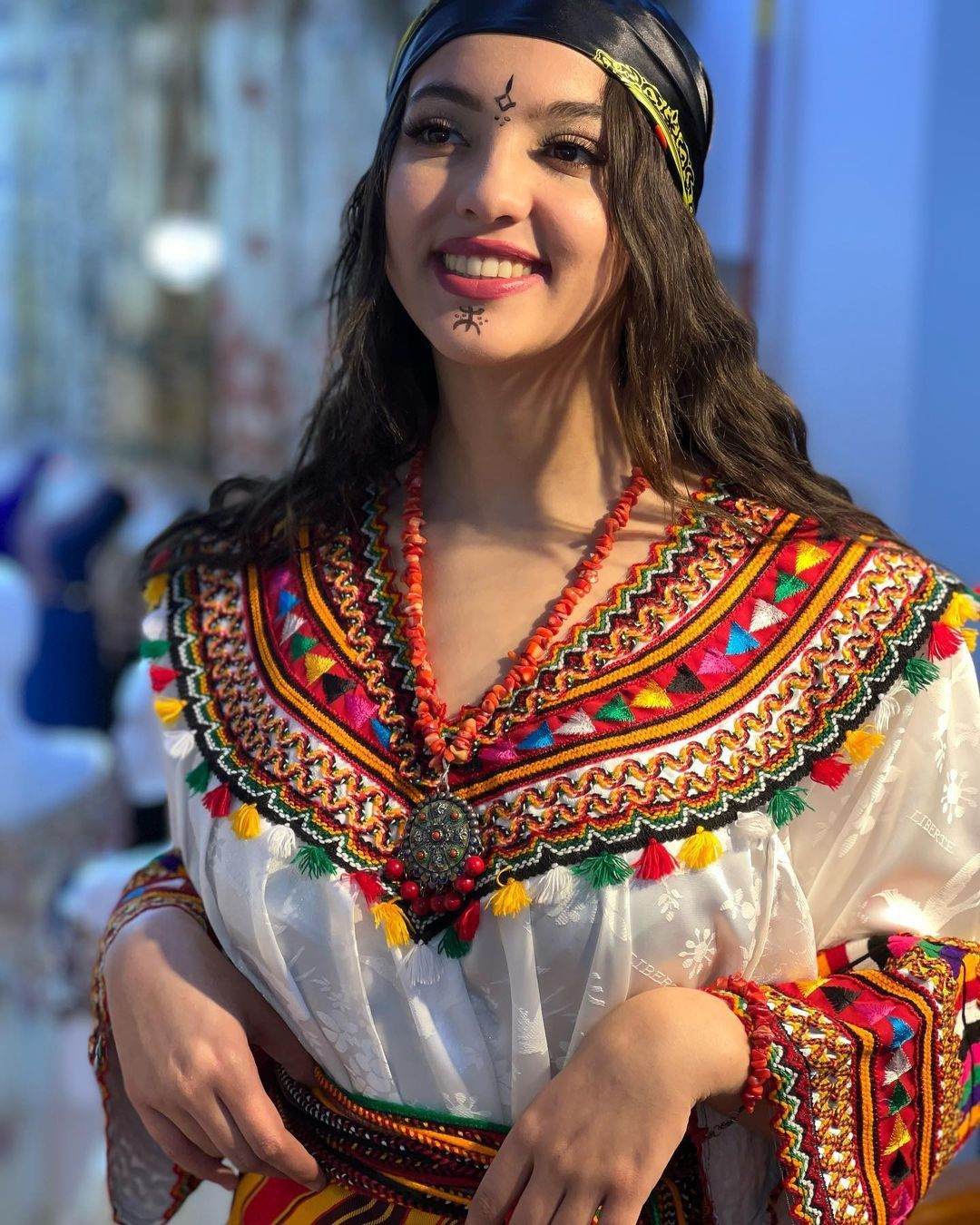
Browse social media long enough and you will inevitably encounter it: a photograph of a Kabyle child with blue or green eyes, captioned as proof of Celtic, Vandal, Roman, or "proto-European" descent. These posts accumulate thousands of shares within Amazigh communities and beyond. The idea is seductive, even romantic, but it is genetically incorrect.
This is not to say that light eyes among Kabyles are a myth. They are entirely real, and they have a rigorous genetic explanation. The problem is that this explanation has nothing to do with Vandals, Celts, or some hypothetical "Nordic race" sheltering in the mountains of Kabylia. It runs through something far older and far more interesting: the Neolithic farmers who shaped the entire Mediterranean world more than 7,000 years ago.
Key Point
The genetic variants responsible for light eyes in Kabyles derive primarily from Anatolian Neolithic farmers, the same populations that colonised Europe and the Maghreb simultaneously. This is not a specifically "European" trait: it is a shared Mediterranean ancestry that predates the genetic distinction between Europeans and North Africans altogether.
Who Are the Kabyles? An Amazigh People of Kabylia
The Kabyles are an Amazigh (Berber) people living primarily in Greater Kabylia and Lesser Kabylia, in northeastern Algeria, a mountainous region stretching from the Mediterranean coast to the foothills of the Atlas. They speak Taqbaylit (Kabyle), a Berber language of the Afro-Asiatic family, and constitute one of the best-documented Amazigh populations genetically in Algeria.
The term "Amazigh" (plural: Imazighen) is the historical self-designation of the people commonly called "Berbers", the latter being a loanword from the Latin barbarus, used by Romans to refer to non-Romanised populations. The Imazighen are the descendants of the indigenous inhabitants of North Africa since at least the Epipalaeolithic, that is, since approximately 15,000 to 13,000 years ago, as confirmed by the remains recovered at Taforalt in Morocco.[1, 3]
The Myth Circulating Online
"Kabyles with blue or green eyes are descendants of Germanic Vandals, Celts, or blond Romans who took refuge in the mountains of Kabylia and preserved their 'Nordic blood'."
What Genetics Actually Shows
Kabyles are genetically consistent with other Imazighen. Their "European-like" component is exclusively Neolithic Anatolian in origin, entirely unrelated to any historical Germanic, Roman, or Celtic migration.
A Genetic History in Four Acts
To understand Kabyle genetics, we must go back well before the Romans, well before the Phoenicians, and well before the first cities. Four major migratory waves shaped the genomes of North African populations:[2, 4]
Act I · ~15,000-13,000 years ago
The Iberomaurusian of Taforalt
The oldest genetically documented inhabitants of North Africa. Their DNA, recovered from the Taforalt cave in Morocco, reveals an ancestry close to Near Eastern Natufians, the result of a back-to-Africa movement from western Asia during the Upper Palaeolithic. This is the most "autochthonous" substrate of the Imazighen.
Act II · ~5,500-4,000 BCE
The Neolithic Wave
Anatolian farmers enter North Africa from two directions: via the Iberian Peninsula (through the Strait of Gibraltar) and from the Levant. These populations, represented by TUR_Barcin_N and TUR_Tepecik_Ciftlik_N in our models, carry the genetic variants associated with light pigmentation.[3, 6]
Act III · ~3,000 BCE onward
The Steppe Pastoralists
A "Steppe" component (Yamnaya) is present at a low level (~8.6% in Kabyles). It reflects either indirect contact through late Neolithic Mediterranean populations, or a more direct Bronze Age arrival. This component is substantially lower than what is observed in Western Europe.[2]
Act IV · ~700 CE onward
Arabisation and Trans-Saharan Trade
The Arab conquest (7th-11th c.) introduced Levant_PPNB ancestry into some North African populations. The trans-Saharan slave trade, from the 1st century BCE through the 19th century CE, added sub-Saharan components, most strongly in populations further south and east.[4, 5]
G25 Modelling: What Do the Coordinates Show?
The Standard G25 Calculator (by Davidski, available on ExploreYourDNA) models Berber populations with an excellent fit. Here are the results for the three main Algerian Amazigh populations:
Fig. 1, G25 modelling of the Kabyle population (Algerian*Berber*Kabyle). Nearly all so-called "European" ancestry is in fact Anatolian Neolithic. WHG (Western Hunter-Gatherers, the actual pre-Neolithic Europeans) represents only 1.6%.
Fig. 2, The Mozabites, an Ibadi-isolated Algerian Saharan population, show a richer Taforalt signal (33.4%) and less Steppe ancestry than the Kabyles, reflecting greater long-term isolation.
Fig. 3, The Timimoun, located at the Saharan fringe, show a markedly higher sub-Saharan component (15% Yoruba) attributable to trans-Saharan trade routes, and substantially less coastal Anatolian Neolithic ancestry.
Comparative Table of Amazigh Populations
| Population | Taforalt | Anatolian Neo.* | Levant PPNB | Yamnaya | WHG | Sub-Saharan** | Distance |
|---|---|---|---|---|---|---|---|
| Kabyle (Algeria) | 29.6% | 53.2% | 1.0% | 8.6% | 1.6% | 5.4% | 0.0144 |
| Mozabite (Algeria) | 33.4% | 50.0% | 0.0% | 5.0% | 1.2% | 10.4% | 0.0195 |
| Timimoun (Algeria) | 22.2% | 23.6% | 28.6% | 7.8% | 0.4% | 17.4% | 0.0201 |
* Sum of Barcin_N + Tepecik_Ciftlik_N · ** Sum of Yoruba + Gambian + Dinka + ETH_4500BP · Standard G25 Calculator (Davidski)
Light Eyes: A Neolithic Story, Not a Celtic One
Let us address the core of the myth directly. Why do some Kabyles have blue or green eyes? The answer lies primarily in two genes: HERC2 and OCA2, located on chromosome 15. A specific substitution in HERC2 (rs12913832) reduces OCA2 expression, lowering melanin production in the iris and resulting in lighter eye colour.
What is crucial, and consistently ignored in popular discussions, is that these variants do not belong exclusively to Northern European populations. They were already present in Anatolian Neolithic farming populations and their descendants throughout the Mediterranean, including the farmers who colonised North Africa from around 5,400 BCE onward.
Why This Is Not "European"
The farmers of Barcin (northwestern Turkey, ~6,500 BCE) and Tepecik-Çiftlik (central Anatolia) already carried light-pigmentation variants. These populations predate the genetic differentiation between "Europeans" and "North Africans". When their descendants migrated toward the Maghreb on one side and toward Europe on the other, they carried these variants in both directions. Kabyle light eyes and Iberian Neolithic light eyes share the same ancestral source, Anatolian farmers, but are not the product of any contact between Europeans and Berbers.
In concrete terms, the Kabyles show 53.2% Anatolian Neolithic ancestry (Barcin + Tepecik), versus only 1.6% WHG (Western Hunter-Gatherers, the actual pre-Neolithic inhabitants of Western Europe). If Kabyle light eyes derived from "Nordic" or Western European populations, we would expect substantially higher WHG or Yamnaya ancestry. The data show nothing of the sort.
WHG: Hunter-Gatherer, Not "Nordic"
It is tempting to conflate WHG (Western Hunter-Gatherers) with Celts or Nordic peoples. This is a framing error. WHG designates Mesolithic populations who inhabited Europe before the arrival of Neolithic farmers, groups such as the individuals from La Braña (Spain, ~5,900 BCE) or Loschbour (Luxembourg). They have no relationship whatsoever to the Gauls, the Vandals, or any historical culture.
Moreover, WHG individuals themselves had variable pigmentation: light eyes were common, but some, such as La Braña 1, combined blue eyes with very dark skin. Light eye colour therefore has multiple ancestral sources, and its presence among Berbers does not point toward any particular historical European group.[2]
Taforalt: The True Autochthonous Substrate
The most "autochthonous" component in Kabyle ancestry is not European, it is the Taforalt / Iberomaurusian signal, representing 29.6% of their genome in our model. These individuals, whose DNA was recovered from the Taforalt cave in Morocco and dated to about 15,100-13,900 years ago, represent the earliest genetically documented inhabitants of North Africa.[3, 6]
Their primary ancestry is close to Natufians of the Near East, suggesting a "back-to-Africa" movement from western Asia, long before the Neolithic. These individuals already carried mitochondrial haplogroups U6 and M1, which remain characteristic of North Africa to this day.
According to Serradell et al. (2024), the Imazighen show genetic continuity traceable back to this Epipalaeolithic period, with an origin distinct from North African Arab populations whose divergence from the Middle East is more recent.[2] The best-supported demographic model (D4, using ABC Deep Learning) places the divergence of the Imazighen from other Eurasian populations at a point predating even the European / Middle Eastern split.
Geographical Heterogeneity Among the Imazighen
An important and frequently overlooked point: the Imazighen do not form a homogeneous genetic bloc. Vilà-Valls et al. (2024) studied three Chaouïa populations from the Aurès mountains (Batna, Khenchela, Oum El Bouaghi) and demonstrated significant microgeographical heterogeneity within an area of only ~2,500 km². The Khenchela population shows notably higher inbreeding levels, visible in their ROH (runs of homozygosity) profiles.[3]
This internal heterogeneity explains why phenotypic traits, including light eye pigmentation, can vary considerably from one village to the next, one valley to the next, without reflecting any distinct historical migration event. Geographic isolation in mountain environments amplifies genetic drift, allowing certain variants (such as those associated with light eyes) to reach higher frequencies in isolated local populations purely by chance.
Genetic Drift and Light Eyes
In a small isolated population, a variant can reach high frequencies through drift alone, independently of any selection pressure or external migration. The Mozabites, isolated in the Algerian desert for centuries for religious reasons (Ibadism), represent an extreme example of this process in North Africa.
The Sub-Saharan Component: The Trans-Saharan Slave Trade
Our models show approximately 5% sub-Saharan ancestry in the Kabyles (Yoruba + Dinka + Gambian). This component is well-documented in the scientific literature: it is the result of the trans-Saharan slave trade, which brought populations from sub-Saharan Africa northward from Roman times through the 19th century.[4]
Lucas-Sánchez et al. (2023) dated two main admixture events in North African populations: a first peak around the 13th-14th centuries CE, involving West African populations similar to present-day Senegambians, and a second around the 17th century CE involving East African populations. The Kabyles, situated in the far north and relatively distant from the main Saharan routes, show among the lowest sub-Saharan components of any Algerian Amazigh group. The Timimoun, in the Saharan zone, show ~17% sub-Saharan signal by contrast.[4]
G25 Coordinates: Model It Yourself
Here are ready-to-use G25 coordinates for Vahaduo. The Algerian*Berber*(Kabyle) averaged population is the most representative reference target for Kabyle modelling. Individual Berber_Algeria samples are also provided for those wishing to explore internal variation.
Averaged Population (Recommended as Target)
Individual Berber_Algeria Samples (for Internal Variation)
These 7 individuals are the most representative of a coastal/northern Kabyle-type profile (high North African component, low sub-Saharan). BerZN103, BerZN113, and BerZN131, strongly displaced on PC1, represent deeply isolated deep-Atlas Berbers and are less representative of Kabyle populations.
Summary: What DNA Actually Tells Us About the Kabyles
Kabyle genetics tells a far richer story than any myth about "Celtic or Vandal descendants". Here is what the numbers show:
| Component | % Kabyle | Historical origin | Linked to light eyes? |
|---|---|---|---|
| MAR_Taforalt | 29.6% | Epipalaeolithic Iberomaurusian (~15,000 years ago), autochthonous North African substrate | No |
| TUR_Tepecik_Ciftlik_N | 37.4% | Late Anatolian Neolithic farmers (~6,000 BCE), carriers of OCA2/HERC2 variants | Yes, likely |
| TUR_Barcin_N | 15.8% | Early Anatolian Neolithic farmers (~6,500 BCE), same source | Yes, likely |
| Yamnaya | 8.6% | Pontic Steppe pastoralists (~3,000 BCE), arrived indirectly via the Mediterranean or Bronze Age contacts | Possible (minor) |
| WHG | 1.6% | Western European Hunter-Gatherers (Mesolithic) | Negligible |
| Sub-Saharan (total) | 5.4% | Trans-Saharan slave trade (1st c. BCE, 19th c. CE) | No |
What People Believe
"The blue or green eyes of Kabyles prove direct descent from historical European populations, Vandals, Celts, blond Romans, who became isolated in the Kabylian mountains."
What Genetics Shows
The light-pigmentation variants originate from Anatolian Neolithic farmers whose descendants colonised Europe and the Maghreb simultaneously. This is not "European" ancestry, it is a shared Mediterranean ancestry that predates the very existence of a genetically distinct Europe.
The Kabyles are an Amazigh people with a deep and layered genetic history, whose distinctiveness derives precisely from the superimposition of these four strata, the Iberomaurusian, the Mediterranean Neolithic, a trace of the Steppe, and the Sahara, and not from any hypothetical European "purity" preserved in the mountains.
References
- Colombo G. et al. (2025). "The origin of modern North Africans as depicted by a massive survey of mitogenomes." Scientific Reports 15, 27025. https://doi.org/10.1038/s41598-025-12209-x
- Serradell J.M. et al. (2024). "Modelling the demographic history of human North African genomes points to a recent soft split divergence between populations." Genome Biology 25, 201. https://doi.org/10.1186/s13059-024-03341-4
- Vilà-Valls L. et al. (2024). "Understanding the genomic heterogeneity of North African Imazighen: from broad to microgeographical perspectives." Scientific Reports 14, 9979. https://doi.org/10.1038/s41598-024-60568-8
- Lucas-Sánchez M., Fadhlaoui-Zid K. & Comas D. (2023). "The genomic analysis of current-day North African populations reveals the existence of trans-Saharan migrations with different origins and dates." Human Genetics 142, 305, 320. https://doi.org/10.1007/s00439-022-02503-3
- El Fahime E. et al. (2025). "Moroccan genome project: genomic insight into a North African population." Communications Biology 8, 584. https://doi.org/10.1038/s42003-025-08020-z
- Fregel R. et al. (2018). "Ancient genomes from North Africa evidence prehistoric migrations to the Maghreb from both the Levant and Europe." PNAS 115 (26), 6774, 6779. https://doi.org/10.1073/pnas.1800851115
- Davidski (G25 / Global25). Standard G25 Calculator, ExploreYourDNA. exploreyourdna.com/calculator/2