
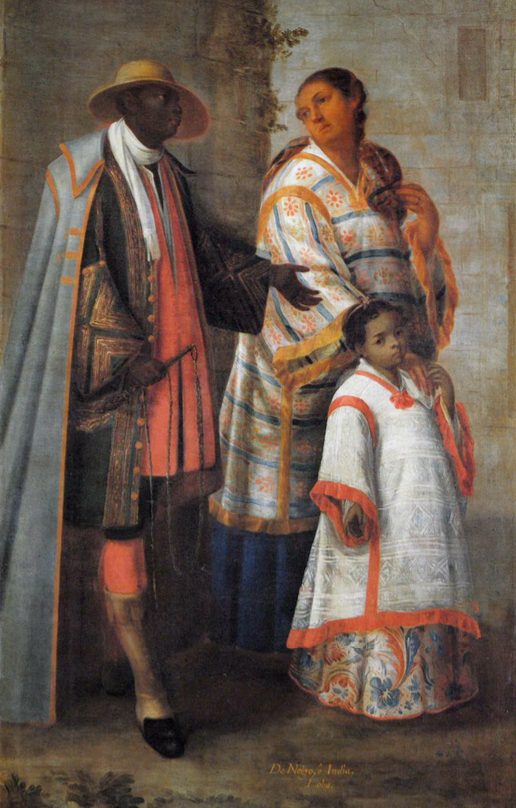
In the heart of modern-day Mexico City, beneath centuries of stone and soil, lie silent witnesses to one of the most overlooked chapters of the colonial Americas: the forced migration of Africans to the New World. Thanks to cutting-edge ancient DNA research, we are now beginning to hear their stories.
An Unmarked Grave, a Global Story
In 2020, researchers from the Max Planck Institute and Mexican collaborators sequenced the genomes of individuals buried in a 16th-century mass grave under the former Hospital Real de San José de los Naturales. Among them, three stood out, known today as SJN001, SJN002, and SJN003. Their skeletal remains told of hard lives and abrupt deaths. Their DNA revealed something deeper.
Genetic Coordinates of Diaspora
Using PCA (Principal Component Analysis), the researchers plotted these individuals within the global genetic landscape. Their positions fall squarely within the range of West African populations, especially those from the Bight of Benin and Angola, regions heavily impacted by the early transatlantic slave trade.
| Sample | PCA1 | PCA2 | Origin Inferred |
|---|---|---|---|
| SJN001 | +0.03 | , 0.002 | Likely West Africa |
| SJN002 | , 0.02 | , 0.012 | West-Central Africa |
| SJN003 | , 0.01 | +0.015 | West Africa |
Despite being uprooted and anonymized by history, their genomes speak to specific homelands, tying them to vibrant cultures and histories across the Atlantic.
More Than Numbers: Lives in Struggle
Osteological analysis showed signs of trauma, malnutrition, and overwork, typical of enslaved individuals subjected to brutal colonial systems. But their DNA also told of health battles: one individual carried traces of the Treponema pallidum bacterium (responsible for yaws), and another bore genetic material from a now-extinct strain of hepatitis B, one of the earliest molecular records of these pathogens in the Americas.
Legacy and Remembrance
These three genomes, compressed into a few kilobytes of data, represent millions. Their presence in a colonial graveyard and now in global genetic databases reminds us that African lives were foundational to the colonial experience in the Americas, not just as anonymous labor but as real people with names, origins, and stories.
Reference:
Barquera, R., Hünemeier, T., Flores, R., Siewert, K.M., Sikora, M., & Krause, J. et al. (2020). Origin and Health Status of First-Generation Africans from Early Colonial Mexico. Current Biology, 30(13), 2544-2555.e5. https://doi.org/10.1016/j.cub.2020.04.002